The Doctor’s Guide to Common Skin Concerns — What’s Happening and What Helps
TL;DR — Summary
Most skin concerns — fine lines, pigmentation, dullness, texture, sensitivity — are driven by changes beneath the surface: collagen decline, barrier disruption, inflammation, and the Exposome. Medical‑grade skincare forms the foundation, with treatments like polynucleotides, microneedling, peels and skin boosters layered on top depending on your goals. Healthy skin is built gradually, not bought quickly — and most people start with skincare plus one supportive in‑clinic treatment.
If you’re noticing common skin concerns like fine lines, pigmentation, dullness or sensitivity, this guide explains what’s happening beneath the surface — and what genuinely helps.
Most people don’t come to clinic asking for a specific treatment.
They come because something about their skin doesn’t quite feel like them anymore. A change in texture that crept up slowly. A loss of the glow they used to take for granted. A crease that appeared somewhere new. A patch of pigmentation that suddenly feels louder than the rest of their face.
They’re not always sure what they need. They just know something has shifted — and they’d like to understand why, and what, if anything, can genuinely be done about it.
This guide is my attempt to answer that honestly.
If you’ve already read my Complete Guide to Skin Treatments, you’ll know that I approach skin health through a hierarchy — skincare and lifestyle first, in-clinic treatments layered on top. This post sits alongside that one, but instead of starting with treatments, we’re starting with you — your concerns, what’s actually driving them biologically, and what a thoughtful, doctor-led response looks like.
1. Fine Lines and Early Ageing
What’s happening beneath the surface:
Fine lines are often the first visible signal of several things happening simultaneously in the skin’s deeper layers. Collagen — the structural protein that gives skin its firmness — naturally declines from our mid‑twenties onwards. Fibroblasts become less active, and the collagen we do produce becomes less organised. Enzymes called MMPs (matrix metalloproteinases) also increase with UV exposure, breaking collagen down more quickly.
Elastin fibres stiffen, natural hyaluronic acid declines, and the Exposome — UV, pollution, stress, sleep disruption — accelerates all of t
They’re not failures. They’re not signs you’ve done something wrong. They’re the natural expression of a skin that’s been living.
That said, how we live, and what we apply to our skin daily, has a genuine influence on the pace of that process.
What actually helps — and why
Medical-grade skincare is the essential starting point here. Retinoids (vitamin A derivatives) are among the most evidence-backed actives in all of dermatology — they work by binding to receptors in skin cells and directly upregulating collagen synthesis while accelerating cell turnover. Peptides signal fibroblasts to produce more collagen. Antioxidants neutralise the free radicals generated by UV and pollution before they can break down collagen structures. Applied consistently, these aren’t cosmetic gestures — they’re biological interventions.
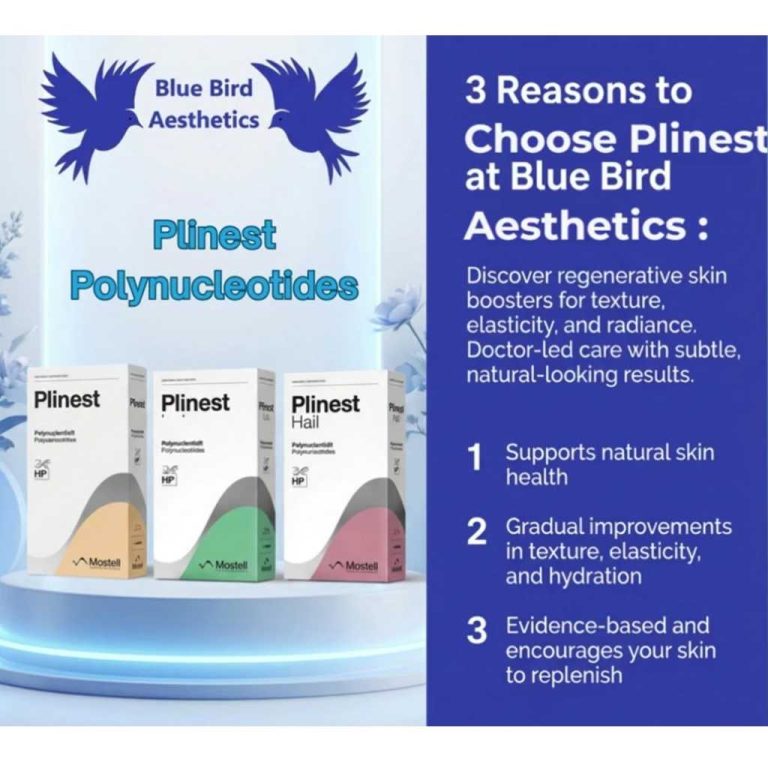
Polynucleotides add a cellular repair dimension that skincare alone can’t reach — stimulating fibroblasts and improving the skin’s capacity for regeneration from within.
Microneedling works in a complementary way, triggering a wound-healing response that encourages new collagen and elastin production.
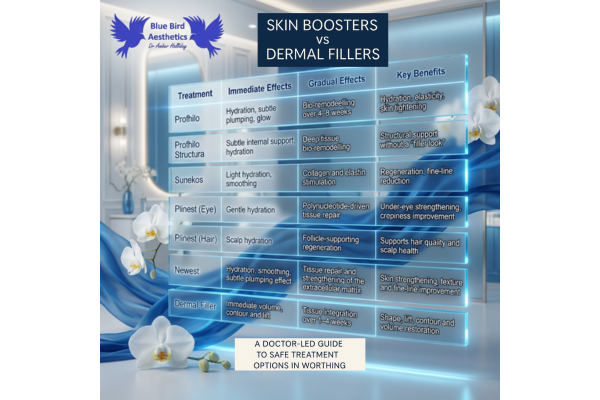
Skin boosters address the hydration deficit that makes fine lines appear more pronounced.
Anti-wrinkle injections can soften expression-driven lines beautifully — but they work on the muscle layer, not the skin itself. Used thoughtfully, as part of a broader plan, they’re a finishing touch. Used alone, they leave the underlying skin quality unchanged.
Where most people start: A good skincare foundation, followed by polynucleotides or a course of microneedling once the skin is well-prepared. For more information see my website.
2. Dullness and Loss of Glow
What’s happening beneath the surface
This is one of the most common things patients describe — and one of the hardest to articulate. Skin that looks flat, tired, or somehow less alive than it used to.
What they’re describing, biologically, is usually a combination of things. Cell turnover naturally slows with age — the process by which new, fresh cells migrate to the surface takes longer, leaving older, more irregular cells sitting at the surface for longer. The skin’s lipid barrier, which reflects light, becomes less intact. Oxidative stress from the Exposome depletes the skin’s natural antioxidant reserves, leaving it less able to cope with daily environmental assault. And dehydration at a cellular level reduces the plumpness that gives skin its luminosity.
Interestingly, chronic stress is a significant driver here that often gets overlooked. Cortisol reduces skin blood flow and impairs the barrier, both of which contribute to that flat, dull appearance.
What actually helps — and why
Vitamin C is the hero ingredient for glow — it’s both a powerful antioxidant and a direct cofactor in collagen synthesis, and it actively inhibits the enzyme (tyrosinase) responsible for excess pigment production. But its effectiveness depends entirely on formulation — unstable vitamin C oxidises before it does much at all, which is why AlumierMD’s stabilised forms make such a practical difference.
Exfoliating acids (AHAs like glycolic and lactic) accelerate the removal of that dulling surface layer, revealing the fresher skin beneath. Chemical peels do this more intensively and with more precision than most over-the-counter products can achieve.
Microneedling improves overall skin quality and light reflection as new collagen organises beneath the surface. Skin boosters restore the internal hydration that gives skin its depth and glow.
Where most people start: AlumierMD skincare with a vitamin C serum, then either a course of peels or microneedling depending on what the skin needs.
3. Pigmentation and Uneven Tone
What’s happening beneath the surface
Pigmentation is one of the more complex concerns I see in my clinic in Worthing, because it has multiple drivers and each one behaves slightly differently.
Melanin — the pigment that gives skin its colour — is produced by cells called melanocytes, and its production is triggered by a range of signals: UV radiation being the most significant, but also inflammation, hormonal fluctuation (which is why pregnancy and the pill can cause melasma), and even heat. The process is driven by an enzyme called tyrosinase, which catalyses the production of melanin in response to those signals.
The reason pigmentation is so persistent is that melanocytes have a kind of memory. Once triggered, they’re easily re-triggered — even by low-level UV that you might not consciously register as “sun exposure”. This is why consistent, daily SPF isn’t optional when we’re treating pigmentation; without it, almost every other intervention is working against a tide.
It’s also worth knowing that pigmentation sits at different depths in different people. Superficial (epidermal) pigmentation responds well to topical treatments and peels. Deeper (dermal) pigmentation, like certain types of melasma, requires more patience, more layers of treatment, and realistic expectations.
What actually helps — and why
Targeted medical-grade skincare is the anchor of any pigmentation treatment plan. Brightening serums containing stabilised vitamin C, kojic acid, azelaic acid, and tranexamic acid all work by different mechanisms to interrupt the melanin production pathway.
Retinoids accelerate turnover, preventing pigment from accumulating in surface cells. Together, used consistently, they genuinely shift things over time.
Chemical peels — particularly those containing lactic acid, glycolic acid, or targeted brightening complexes — remove pigmented surface cells and reduce melanocyte activity.
Microneedling, used with the right protocols, may help improve overall tone when used carefully while improving overall skin quality. But I always have an honest conversation about expectations — pigmentation treatment requires patience, consistency, and an absolute commitment to daily SPF.
Where most people start: Targeted AlumierMD skincare and a course of peels, with clear guidance on SPF and lifestyle factors alongside.
4. Texture, Pores and Acne Scarring
What’s happening beneath the surface
Texture changes are structural — they happen in the dermis, not just at the surface — and that’s why they don’t respond to superficial products alone.
Pores appear enlarged when the collagen that surrounds them loses its structure and support. Without that scaffolding, the opening stretches and becomes more visible. Post-acne scarring occurs when the inflammatory process of a breakout damages the dermis, causing irregular collagen deposition as the skin heals — the result is either depressed (atrophic) scars, where tissue is lost, or raised (hypertrophic) scars, where excess collagen forms.
These are genuine structural changes. Treating them requires stimulating new, organised collagen — not just improving the surface.
What actually helps — and why
Microneedling is one of the most effective approaches for texture and acne scarring in non-invasive aesthetics. The controlled micro-injuries it creates trigger the wound-healing cascade — including fibroblast activation and new collagen and elastin synthesis — in a targeted, controlled way. Over a course of sessions (typically four to six, spaced four to six weeks apart), the skin’s structural support visibly improves. Results continue to develop for months after the final session, as collagen matures.
Polynucleotides complement this beautifully — they improve the skin’s capacity for regeneration and healing, which means the skin responds better to the microneedling stimulus and recovers more efficiently.
Resurfacing peels help at the surface layer, improving texture and reducing post-inflammatory pigmentation (the redness or darkness left after spots).
Barrier-supporting skincare creates the conditions in which all of this can work.
Where most people start: Microneedling as the core treatment, alongside a properly structured skincare routine.
5. Dehydration and Crepey Skin
What’s happening beneath the surface
This is one that I want to address carefully, because it’s often misunderstood — both by patients and in how it’s marketed.
Crepey, dehydrated skin isn’t simply “dry skin” that needs more moisturiser. It’s a functional state — the result of a compromised skin barrier, reduced natural hyaluronic acid in the dermis, and cumulative Exposome damage that has eroded the skin’s ability to retain water effectively. The barrier’s job is to keep water in. When it’s disrupted — by over-exfoliation, harsh ingredients, UV damage, or ageing — transepidermal water loss increases, and no amount of topical hydration can compensate for that leak.
Hyaluronic acid (HA) is naturally present in the dermis and is extraordinary in its capacity to hold water — a single molecule can bind up to 1,000 times its own weight. As we age and as Exposome damage accumulates, dermal HA levels decline significantly, reducing the skin’s internal reservoir of hydration.
What actually helps — and why
Skin boosters deliver hyaluronic acid directly into the dermis — replenishing that reservoir where it’s actually needed, rather than sitting on the surface. The improvement in skin quality, plumpness, and crepiness is often one of the most noticeably satisfying results patients describe.
Polynucleotides add a regenerative layer — they don’t just hydrate, they support the skin’s capacity to produce its own HA and improve barrier function at a cellular level.
Barrier-repair skincare is the essential foundation here. Ingredients like ceramides, niacinamide, and humectants applied consistently help rebuild the barrier from the outside, reducing transepidermal water loss and improving the skin’s ability to retain the hydration it has. Without this, other treatments are working against a compromised canvas.
Where most people start: At my doctor‑led aesthetics clinic in Worthing I recommend Skin boosters alongside barrier-focused skincare — often the combination that delivers the most immediate, visible change.
6. Under-Eye Concerns — Darkness, Crepiness, Fine Lines
What’s happening beneath the surface
The skin around the eye is the thinnest on the face — approximately 0.5mm, compared to 2mm elsewhere. This makes it uniquely vulnerable to the signs of ageing, and it means that what shows up here often shows up first.
Under-eye darkness has several possible drivers, and it’s important to distinguish between them because they respond differently. Vascular darkness occurs when the fine blood vessels beneath this thin skin show through — it tends to look blue-purple and worsen with fatigue and fluid retention. Pigmentary darkness is caused by excess melanin, often with a brown tone, and is more common in darker skin types and following sun exposure or inflammation. Structural darkness is actually shadow — caused by volume loss in the tear trough area creating a hollow that casts shade.
Crepiness and fine lines around the eyes are largely driven by the same collagen and elastin decline we’ve discussed elsewhere — but accelerated in this area by constant movement (we blink approximately 10,000 times a day) and the fact that the skin here has very few sebaceous glands, making it naturally drier.
What actually helps — and why
Polynucleotides are particularly well-suited to the under-eye area — they improve tissue quality, stimulate regeneration, and reduce crepiness in a way that feels genuinely appropriate for such a delicate zone. There’s no volume being added, no risk of the puffiness that can occur with filler in this area. Just a gradual, biological improvement in the skin itself.
Skin boosters can also be used carefully in this area to improve hydration and surface quality.
Targeted eye skincare — particularly products with peptides, caffeine (which supports vascular tone), and antioxidants — supports and maintains results between treatments.
Where most people start: Polynucleotides — consistently one of the treatments patients find most transformative for this area.
7. Redness, Sensitivity and Reactive Skin
What’s happening beneath the surface
Sensitive, reactive skin is often described by patients as a personal failing — something fragile or delicate about them. I’d gently push back on that framing.
Sensitive skin is usually overwhelmed skin. It’s the result of a compromised barrier allowing irritants, allergens, and environmental triggers to penetrate and provoke an inflammatory response that wouldn’t occur if the barrier were intact. When the barrier is healthy, most of what the world throws at your skin simply doesn’t get through. When it’s compromised — by harsh products, over-exfoliation, UV, stress, or simply the natural thinning that comes with age — the skin becomes reactive not because it’s weak, but because its defences have been depleted.
Rosacea is a distinct condition with a vascular and inflammatory component — it involves abnormal blood vessel reactivity and an altered immune response in the skin — but the barrier is still a key factor in managing it. The gut-skin axis is also increasingly recognised as relevant here: the microbiome’s influence on systemic inflammation can show up on the face as redness and sensitivity.
What actually helps — and why
Barrier repair is everything here, and it has to come first. That means skincare built around ceramides, niacinamide, gentle humectants, and calming antioxidants — and it means removing anything from the routine that might be contributing to the disruption. This is where I often have the most impactful consultation conversations, because patients are frequently using products that are actively making things worse without realising it.
Polynucleotides have a genuinely calming, regenerative effect in reactive skin — the tissue repair they stimulate supports barrier recovery and reduces the inflammatory background that drives sensitivity. They’re one of the few in-clinic treatments I’d feel comfortable recommending in this skin type as they often very well‑suited.
Lifestyle factors — stress management, sleep, gut health, identifying personal triggers — matter enormously here and are always part of the conversation.
Where most people start: A carefully rebuilt skincare routine, followed by polynucleotides once the skin has stabilised.
Healthy skin is beautiful skin
8. “I Don’t Know What I Need — I Just Want My Skin to Look Better”
This is the most common starting point — and absolutely the right one.
You don’t need to arrive with a diagnosis or a treatment plan in mind. You don’t need to have done your research or know the difference between polynucleotides and skin boosters. You just need to arrive with your skin and your questions — and we’ll work out the rest together.
What a doctor-led consultation gives you is context. A clear understanding of what your skin is doing and why, a realistic picture of what’s possible and over what timeframe, and a plan that’s built around you rather than around a treatment menu.
Where Most Patients Start
If it’s helpful, here’s how I tend to think about first steps, based on what I see most commonly in clinic:
If you’re new to skin treatments — we usually begin with AlumierMD skincare and one gentle in-clinic treatment, typically microneedling or a light resurfacing peel. This builds a strong foundation and prepares your skin to respond well to everything that follows. The investment in getting this right early pays dividends later.
If your main concern is skin quality and ageing — polynucleotides alongside well-chosen medical-grade skincare is often the most effective and appropriate starting point. These address the skin at a cellular level, improving quality, hydration, and resilience in a way that feels natural and gradual.
If you want to look refreshed without changing your features — skin boosters or microneedling can significantly improve radiance, smoothness, and hydration. These treatments work beautifully when your skincare is already doing its job.
Where you start isn’t about age, or how your skin “should” look at a certain point in life. It’s about what will genuinely support your skin, your goals, and your lifestyle — long term.
If you’d like a calm, considered, doctor-led assessment of where your skin is now and what it needs, I’d love to help you work that out — without pressure, without a hard sell, and without any treatment you don’t genuinely need. I work with patients across Worthing, West Sussex and the surrounding areas.
If you are choosing a clinic, use my Safe Aesthetics guide to help you make informed choices.
Visit our Skin Myths page, where Dr Halliday breaks down more than 50 common misconceptions and gives clear, doctor‑led answers.
To learn more about Aesthetics, you can also read my Ultimate Guide to Aesthetics Blog
Doctor‑led medical aesthetics clinic in Worthing, West Sussex. Focused on enhancing natural beauty, improving overall skin quality and adhering to clinically safe treatment pathways.
Unsure where to start? Try our doctor-designed Treatment Finder Quiz