How to Choose a Safe Aesthetics Clinic in Worthing (2026): A Doctor’s Guide to What Really Matters
Qualifications, red flags, prescribing rules, and an honest self-assessment quiz — from a GP specialising in medical aesthetics
By Dr Amber Halliday, GP & Aesthetics Doctor | Blue Bird Aesthetics, Worthing | Updated 2026
TL;DR — Key Takeaways
- ✓ A safe clinic follows medical standards, not just aesthetic trends.
✓ Botox is a Prescription-Only Medicine — a qualified prescriber must assess you face-to-face before any treatment.
✓ Dermal fillers are less regulated, which makes your choice of practitioner even more important.
✓ You should always have a thorough consultation, written consent, and clear aftercare before any injectable.
✓ Red flags include rushed appointments, same-day pressure, unclear prescribing, and vague complication plans.
✓ The safest clinics prioritise long-term outcomes over quick results — and are willing to say no.
✓ Doctor-led clinics bring statutory accountability, emergency management capacity, and deeper clinical training.
✓ Use the quiz in this article to sense-check any clinic you are considering.
Choosing a doctor-led clinic is not about prestige — it is about safety, accountability, and clinical expertise
If you’ve ever tried to choose an aesthetics clinic and felt genuinely unsure who to trust, you’re not alone.
Many of my patients in Worthing tell me the same thing: “I just want to look fresher — but I don’t know where to start, or how to know what’s safe.”
The difficulty is that aesthetics sits in a space between healthcare and beauty — and not all clinics operate to the same standards. Some are medically led, with full clinical governance. Others rely on short courses, remote prescribing or marketing-led decisions. From the outside, they can be difficult to tell apart.
This guide gives you a clear, medically grounded framework for choosing safely — including a self-assessment quiz you can use to evaluate any clinic you are considering.
| “My approach is simple: understand the patient first, then choose the treatment. Never the other way around.” — Dr Amber Halliday |
Who This Article Is For
This guide is especially useful if you:
- Are new to aesthetic treatments and want to make a safe first choice
- Feel unsure how to compare clinics or verify qualifications
- Have seen unusually low prices and felt uneasy about what that might mean
- Have had a previous experience that did not go as expected
- Want to understand the practical difference between a medical clinic and a beauty setting
- Simply want natural, subtle results and prefer a calm, evidence-based approach
By the end of this guide, you will know exactly what to look for, what questions to ask, and — with the help of the quiz — how to assess any clinic you are considering before you commit.
1. Medical Aesthetics vs Beauty Aesthetics — What’s the Difference?
This is the most important distinction in aesthetics — and one that is frequently obscured by similar-looking marketing on clinic websites and social media.
Medical aesthetics is delivered by regulated healthcare professionals: doctors, dentists, nurse prescribers or pharmacist prescribers. These practitioners have completed years of formal clinical training, hold statutory registration with a regulatory body, carry appropriate medical indemnity insurance, and are professionally accountable.
Beauty aesthetics is delivered outside this framework. Training varies enormously — from a few days to a few months. There is no statutory regulatory body with the same powers as the GMC, NMC or GDC. This does not mean every non-medical practitioner is unsafe, but the safety infrastructure is fundamentally different.
| Medical / doctor-led clinic | Non-medical / beauty setting | |
| Botox prescribing | Legal, face-to-face, by a registered prescriber | May use remote prescribing or third party |
| Anatomy training | 7+ years medical education incl. vascular anatomy | Training varies: days to months |
| Complication management | Diagnoses and treats on premises; holds emergency medicines | May not recognise or manage complications |
| Regulatory body | GMC / NMC / GDC — verifiable, enforceable | No equivalent statutory accountability |
| Medical indemnity | Comprehensive medical indemnity required | Variable; may not cover injectable complications |
| Consultation standard | Full medical history, anatomy review, medications | Variable; may be brief or sales-led |
| Declines when appropriate | Ethically required to decline unsuitable requests | Commercial pressures may override clinical restraint |
The column that matters most is complication management. A vascular occlusion — where filler inadvertently enters a blood vessel — is rare but serious, and can cause tissue damage or vision loss. It requires immediate diagnosis, a prescription emergency medicine, and clinical management. Only a medically qualified clinician is equipped to respond.
| Why this matters in practice This is not a theoretical concern. Serious filler complications are reported regularly in the UK, and many involve practitioners working outside a medical setting. Choosing a medically qualified clinician is not about prestige — it is about having someone who can recognise and manage a complication before it becomes serious. |
2. What Does ‘Safe’ Actually Mean in Aesthetics?
Safety in aesthetics is not simply the absence of complications. It is a full clinical framework: appropriate patient selection, properly informed consent, technically correct treatment, and the capacity to support the patient if anything goes wrong afterwards.
A full, unhurried medical consultation
Before any injectable treatment, a safe clinic will conduct a thorough consultation covering your full medical history, current medications, allergies, previous treatments, skin health, facial anatomy, goals, and realistic expectations. This is not a formality — it is a clinical assessment that determines whether treatment is appropriate for you at all.
A consultation that takes five minutes, happens on the same day as treatment, or feels like a sales appointment is a concern.
A qualified prescriber who personally assesses you
Botulinum toxin (anti-wrinkle injections) is a Prescription-Only Medicine in the UK. It cannot be legally or safely administered without a valid prescription issued following a face-to-face assessment by a qualified medical prescriber. The prescriber must be the person who sees you, assesses you, and takes clinical responsibility. Remote prescribing — where a prescriber signs off patients they have never met — does not meet this standard.
Transparent product sourcing
You are entitled to know exactly what is being injected. A reputable clinic will tell you the product name, confirm it is UK-licensed, and explain why it has been chosen for your specific case. Vagueness or deflection on this question is a red flag.
A clear complication protocol
A well-governed clinic plans for rare complications. It carries emergency medicines on the premises — including hyaluronidase for emergency filler dissolution — has a clear escalation pathway, provides direct post-treatment contact, and offers follow-up as standard. If a clinic cannot answer “what happens if something goes wrong?” with confidence, that is a significant concern.
Written consent and aftercare
Informed consent is not a signature on a form — it is a documented conversation about what you are consenting to, the risks, and the alternatives. Written aftercare instructions and a direct contact number should be provided to every patient before they leave.
| About Blue Bird Aesthetics At Blue Bird Aesthetics, every consultation is conducted by Dr Amber Halliday personally — an NHS GP who prescribes, performs, and takes clinical responsibility for every treatment. No hand-overs, no remote prescribing, and no same-day pressure. If a treatment is not appropriate, she will say so. |
3. Prescription-Only Medicines in Aesthetics
Many patients are surprised to learn how many common aesthetic treatments involve prescription medicines. This matters because a POM can only be legally supplied by a qualified prescriber following an individual clinical assessment.
- Botulinum toxin (anti-wrinkle injections) — the most commonly requested aesthetic POM
- Hyaluronidase — the emergency medicine used to dissolve filler in a vascular complication; its presence on the premises is a baseline safety requirement
- Lidocaine-containing products — including dental blocks used for lip procedures
- Prescription-strength skincare — certain retinoids and hydroquinone formulations
- Vitamin injections at prescription concentration — including high-dose B12 and vitamin D
Any practitioner administering these without a valid, individually assessed prescription is acting unlawfully. This is a patient safety issue — not a technicality.
Anti-wrinkle injections at Blue Bird Aesthetics
4. The Hidden Risk: ‘One-Day Prescriber’ Clinics
One practice patients are often unaware of is how prescribing is sometimes structured in non-medical aesthetic settings. In some clinics, a prescriber is brought in briefly to sign prescriptions for multiple patients. They may never have met those patients, may not be present during treatment, and may have no ongoing involvement in aftercare.
This model is sometimes described as ‘collaborative prescribing’ or ‘prescribing support’. While legitimate versions exist, it is also used in ways that do not meet the standard of safe, individualised prescribing.
The problems this creates
- The prescriber has not assessed you as an individual — they cannot know whether treatment is appropriate for your specific medical history
- If a complication arises, clinical responsibility may be unclear or contested
- The person injecting you may not have the training to recognise or manage a serious reaction
- You may have no direct line to a clinician after your treatment
The question to ask is not just “Is there a prescriber involved?” — but “Are you the prescriber who will personally assess me, and will you remain responsible for my care throughout?”
| How Blue Bird Aesthetics works Dr Halliday is the prescriber, the treating clinician, and the person responsible for your care. She conducts every consultation personally, and patients have her direct contact throughout their treatment and recovery. No third party, no hand-off, no ambiguity. |
5. Green Flags and Red Flags — A Side-by-Side Guide
Here is a practical reference for evaluating any clinic before you book. If you encounter multiple red flags in the same setting, that is a strong signal to look elsewhere.
| What to look for |
| Consultation style |
| Botox prescribing |
| Product transparency |
| Complication plan |
| Pressure to book |
| Aftercare |
| Credentials |
| Pricing |
| Green flag ✓ |
| ✓ Unhurried, medically thorough, questions welcomed |
| ✓ Face-to-face with the registered prescriber who treats you |
| ✓ Names products and confirms UK licensing |
| ✓ Clear protocol; emergency medicines on premises |
| ✓ Happy for you to take time; no same-day expectation |
| ✓ Written, clear; direct contact provided |
| ✓ Verifiable GMC / NMC / GDC registration |
| ✓ Transparent; no upselling during consultation |
| Red flag ✘ |
| ✘ Brief, rushed or sales-led |
| ✘ Remote prescribing or prescriber not mentioned |
| ✘ Vague, evasive or redirects the question |
| ✘ Unable to answer or dismisses the question |
| ✘ Same-day urgency or limited-time offers |
| ✘ Generic or not provided |
| ✘ Credentials not shared or not verifiable |
| ✘ Unusually low; upsell pressure present |
6. Questions to Ask Before Booking
A well-governed, confident clinic will welcome all of these. Evasion, impatience or vagueness in response to any of them is itself informative.
About the practitioner
- Are you a regulated healthcare professional? What is your registration number, and which body can I verify it with?
- Are you the prescriber for this treatment? Will you personally assess and treat me?
- What is your specific training in aesthetics, and how long have you been practising?
About the treatment
- What product will be used, and is it UK-licensed?
- What are the realistic risks in my specific case — not just the general risks?
- Is there anything in my medical history that makes this treatment less suitable for me?
- What are the alternatives, including the option of not treating?
About the clinic
- Do you carry hyaluronidase on the premises for emergency filler dissolution?
- What is your protocol if I have a concern after I leave?
- Will I receive written aftercare instructions and a direct contact?
- Is there a cooling-off period, or am I expected to proceed today?
| If a question makes a clinic defensive, that’s your answer A well-run clinic is proud of its standards. Questions about qualifications, prescribing, product sourcing and complication protocols should be met with clarity and confidence — not deflection or pressure to move on. |
7. Why Do Prices Vary So Much?
Significant price variation between clinics reflects real differences in what is being provided.
What higher prices typically reflect
- More thorough, time-intensive consultations — a 45-minute medical consultation costs more to provide than a 10-minute beauty assessment
- Higher-quality, UK-licensed products from regulated pharmaceutical suppliers
- A properly governed clinical environment with appropriate infection control
- Medical indemnity insurance, which is significantly more expensive than standard beauty insurance
- The cost of carrying emergency medicines on the premises
- Ongoing clinical CPD maintained to medical standards
What unusually low prices may reflect
- Shorter or less thorough consultations
- Grey-market or unverified product sourcing
- Less experienced practitioners charging entry-level rates
- Reduced clinical governance overall
This is not to say all lower-priced clinics are unsafe. But prices significantly below the typical range for a given treatment in your area should prompt you to understand why before booking.
| “If the price seems too good to be true in aesthetics, something is usually missing. Most often it’s the consultation time, the product quality, or the clinical governance. The treatment looks the same from the outside. The safety net underneath it is different.” — Dr Amber Halliday |
8. How to Verify a Practitioner’s Credentials
Every registered UK healthcare professional has a publicly searchable registration number. Verification takes two minutes and gives you independent confirmation of their qualification status.
- Doctors — GMC register at gmc-uk.org. Confirms registration status and any conditions on practice.
- Nurses and nurse prescribers — NMC register at nmc.org.uk. Confirms registration and prescribing qualification.
- Dentists — GDC register at gdc-uk.org.
- Save Face — a voluntary accreditation scheme; a useful indicator, but not mandatory.
Any qualified, registered clinician will have no objection to you verifying their registration. If a practitioner is reluctant to share their number, that is a serious concern.
A note on reviews: they can indicate atmosphere and communication style, but are a poor proxy for clinical safety. Most complications appear weeks or months after treatment, not immediately. Reviews specifically mentioning honest consultations, appropriate clinical restraint, and good post-treatment support are the most meaningful signals.
9. What to Expect at a Proper Medical Consultation
A good aesthetic consultation feels like a healthcare appointment — not a sales meeting. You should leave feeling clearer, better informed, and more confident in your decision, whatever that decision turns out to be.
What a safe consultation includes
- Adequate time — a thorough consultation cannot be completed in five minutes
- Full medical history review — including all medications, supplements, previous treatments and relevant medical conditions
- Skin and anatomy assessment — not just a discussion of what you want, but an assessment of what is appropriate for your anatomy
- An honest discussion of what treatment can and cannot achieve — including realistic timescales and limitations
- A clear explanation of the risks specific to your case, not just a generic list
- Discussion of alternatives, including doing nothing
- Written consent documentation, with time to read it properly before signing
- A cooling-off period — you should never feel expected to proceed on the same day
- Written aftercare instructions and a direct contact for post-treatment concerns
The consultation is not preparation for treatment — it is the most important part of the process. A practitioner who rushes it is one whose clinical judgement you cannot fully rely on.
10. A Simple Sense-Check After Your Consultation
After a consultation — or even just an initial enquiry — work through these questions honestly. They are all phrased positively, so if the answer to any of them is ‘no’, that is a signal worth taking seriously before proceeding.
| If the answer to any of these is ‘no’, pause before booking: Did I feel genuinely listened to — not hurried or managed? Was the consultation unhurried and medically thorough? Did I feel entirely free to ask questions without being redirected? Was I given time to decide, with no pressure to book on the day? Could the practitioner clearly explain what happens if something goes wrong? Do I understand what will be injected, and is it a UK-licensed product? Would I feel comfortable contacting them with a concern after my treatment?Do I genuinely trust this person with my face and my health? |
That last question — ‘do I genuinely trust this person?’ — is the most important one. Credentials and clinical governance matter enormously. But so does your instinct. Both can be true at once.
11. QUIZ — How Safely Are You Choosing Your Aesthetics Clinic?
This quiz is designed to help you evaluate any clinic you are considering. Answer each question honestly based on your experience or what you have observed about the clinic. Total your score at the end.
Scoring: A = 3 points • B = 2 points • C = 1 point • D = 0 points
| Q1 — Who performs your treatment? | ||
| A | A medical doctor with aesthetics training | 3 pts |
| B | A registered nurse or prescribing clinician | 2 pts |
| C | A beauty therapist with some aesthetics courses | 1 pts |
| D | I’m not sure | 0 pts |
| Q2 — How does the clinic handle your medical history? | ||
| A | Full medical consultation with detailed questions and documented records | 3 pts |
| B | A short consultation covering the key health issues | 2 pts |
| C | A quick verbal check without documentation | 1 pts |
| D | No medical questions asked at all | 0 pts |
| Q3 — What information do you receive before treatment? | ||
| A | Clear explanation of risks, benefits, alternatives, and written aftercare | 3 pts |
| B | A basic overview of the treatment and what to expect | 2 pts |
| C | Minimal explanation — mostly focused on results and the booking process | 1 pts |
| D | No real explanation provided | 0 pts |
| Q4 — How does the clinic manage complications? | ||
| A | Clear doctor-led plan, emergency drugs on premises, ability to prescribe and treat | 3 pts |
| B | A protocol in place, with referral pathways if needed | 2 pts |
| C | They say complications are rare and don’t elaborate | 1 pts |
| D | They avoid the topic or seem uncomfortable with the question | 0 pts |
| Q5 — What products does the clinic use? | ||
| A | CE-marked or FDA-approved medical-grade products sourced from regulated pharmacies | 3 pts |
| B | Mostly medical-grade products with occasional alternatives | 2 pts |
| C | Mixed products, not always from named or branded suppliers | 1 pts |
| D | Unknown, unlabelled, or the clinic will not say | 0 pts |
| Q6 — What does the clinic environment feel like? | ||
| A | Clean, clinical and professional — with visible hygiene and sterile standards | 3 pts |
| B | Clean and tidy, but not specifically clinical in setup | 2 pts |
| C | A bit cluttered or informal | 1 pts |
| D | A home environment or space with no clinical setup | 0 pts |
| Q7 — How transparent is the pricing? | ||
| A | Clear pricing, no upselling, written quotes provided | 3 pts |
| B | Mostly clear, with some optional add-ons mentioned | 2 pts |
| C | Pricing vague until the day of the appointment | 1 pts |
| D | Pressure selling, unclear costs, or add-ons pushed during consultation | 0 pts |
| Q8 — How do you feel during the consultation? | ||
| A | Informed, respected, and never rushed or pressured | 3 pts |
| B | Mostly comfortable, with a few unanswered questions | 2 pts |
| C | A little unsure, pressured, or unclear on the details | 1 pts |
| D | Rushed, confused, or sold to rather than advised | 0 pts |
YOUR SCORE:
Add up your points from each question. Maximum possible: 24.
| Score | What it means |
| 20–24 | You are choosing a very safe, medically led clinic. You are prioritising your wellbeing and making genuinely informed decisions. Keep doing what you are doing. |
| 14–19 | Mostly safe, but a few areas worth tightening. You are making broadly reasonable choices, but there are one or two gaps. Review your lower-scoring answers and consider whether they represent acceptable compromises. |
| 8–13 | Risky territory. You may be choosing convenience or price over safety. The questions where you scored low are worth taking seriously before your next treatment. |
| 0–7 | High risk. Strongly reconsider your clinic choice. The safety standards apparent from your answers are very low, and this increases your risk of a preventable adverse outcome. Please read this guide in full before booking again. |
| Want to assess your experience at Blue Bird Aesthetics? If you have already had a consultation or treatment at Blue Bird Aesthetics, you are welcome to use this quiz to evaluate that experience too. If anything scored less than an A, I’d genuinely like to know — please get in touch directly. |
12. Why Doctor-Led Clinics Offer a Deeper Safety Net
Doctors are not the only practitioners who can deliver safe aesthetic treatments — experienced nurse prescribers and dentists also work to high clinical standards. But a doctor-led clinic does offer specific structural advantages.
- Seven or more years of medical education, including vascular anatomy, pharmacology and clinical decision-making
- Diagnostic training — the ability to assess whether a skin change requires medical attention rather than aesthetic treatment
- Advanced Life Support training and the ability to manage acute medical emergencies
- GMC registration — the highest level of statutory professional accountability in UK healthcare
- An ethical framework grounded in medical duty of care, including the obligation to decline treatment that is not in a patient’s interest
For a detailed discussion of what doctor-led care means in practice: Why choose a doctor for Botox and fillers?
Following the Health and Care Act 2022, significant changes came into force in England on 1 September 2023. It is now a criminal offence for a non-healthcare professional to administer botulinum toxin (commonly known as Botox) without a valid prescription from a qualified prescriber.
Botox has always been a prescription-only medicine (POM) in the UK. The prescription must be issued by a regulated prescriber — a doctor (GMC-registered), dentist (GDC-registered), nurse prescriber, or pharmacist prescriber — following a face-to-face or clinically appropriate consultation with the patient.
⚠ Important Dermal fillers currently have fewer legislative protections than Botox, although regulation is strengthening. This makes checking your practitioner’s credentials for filler treatments even more critical right now. A reputable practitioner will welcome scrutiny.
These legal changes are significant, but they do not automatically guarantee your safety. Prescribing rights alone do not confer the depth of anatomical knowledge, clinical judgement, or emergency competency that comes with full medical training. That is why choosing a doctor — not just a prescriber — matters.
Why Patients Choose Blue Bird Aesthetics
Choosing where to have a clinical skin treatment is a significant decision. Here are the things patients consistently tell us matter most to them:
| Doctor-led from start to finish | Your consultation, treatment and aftercare are all with Dr Halliday — a fully qualified GP with advanced aesthetics training. |
| Safety-first approach | Sterile equipment, full contraindication screening, medical-grade protocols. Patients tell us they feel genuinely safe, not just reassured. |
| A calm environment | No pressure, no upselling, no rushed appointments. The pace here is unhurried and genuinely patient-focused. |
| Honest, non-salesy advice | If a treatment isn’t right for you, you’ll be told — and offered the option that is. The consultation is a genuine clinical assessment, not a sales conversation. |
| Full skin health perspective | As a GP, Dr Halliday looks at your skin health as a whole — not just the concern you’ve come in about. |
Frequently Asked Questions
Does a Botox injector legally need to be a doctor in the UK?
Since September 2023, only a qualified prescriber (doctor, dentist, nurse or pharmacist prescriber) can administer Botox legally in England. The injection can still be delegated in some models. Choosing a doctor means your prescriber and injector are the same person, with full clinical responsibility for your care.
Is Botox by a doctor safer than by a beautician?
Simply put : Yes. Doctors have a minimum of five years’ medical training covering anatomy, pharmacology, and emergency management — before undertaking any specialist aesthetic training. A beautician or lay aesthetician may have completed a short course with no clinical background. In the event of a rare but serious complication such as a vascular occlusion, a doctor is trained and equipped to respond immediately.
What is the difference between a doctor, nurse prescriber, and beautician doing fillers?
A doctor has 5+ years of medical school training plus postgraduate clinical experience. A nurse has 3 years of nursing training and may have additional prescribing and aesthetic qualifications depending on their career path. A beautician or lay injector has no baseline regulated medical training. The key differences are anatomical knowledge depth, prescribing rights, complication management competency, and professional accountability to a statutory regulator.
How do I check if my aesthetic practitioner is qualified and safe?
You can verify a doctor on the GMC medical register, a nurse on the NMC register, and a dentist on the GDC register. For a comprehensive checklist of what to look for, use our free Aesthetic Practitioner Safety Checker.
Are dermal fillers regulated in the UK?
Since October 2023, administering facial filler requires the involvement of a qualified health professional under the Health and Care Act 2022. However, the regulatory framework for fillers remains less robust than for botulinum toxin. Your choice of practitioner matters enormously — a medically qualified clinician using UK-licensed products in a properly governed setting is significantly safer than alternatives.
What should I do if I have a complication after treatment?
Contact the clinic immediately. A properly governed clinic will have a direct contact and a clear protocol. If you experience blanching, mottled skin, severe pain, or visual changes after a filler treatment, seek emergency medical attention straight away — these may indicate a vascular complication and should not be waited out.
Is it safe to have aesthetic injections at a beauty salon?
Injectable treatments involving Prescription-Only Medicines should only be performed in a setting where a qualified prescriber has personally assessed you. If a beauty salon offers Botox or fillers, ask specifically how prescribing is managed and who holds clinical responsibility for your care.
How do I know if a price is suspiciously low?
Compare prices to the typical range for that treatment in your area. If a price is significantly lower, ask what accounts for the difference: shorter consultation? Different product? Less governance? The answer will help you decide whether the cost-saving reflects an efficiency or a reduction in clinical standards. A good clinic, with rigorous standards, safe approach and certified training and products will need to charge more but this is what you are paying for.
The Bottom Line
Choosing an aesthetics clinic is a healthcare decision, and it deserves the same care and scrutiny you would apply to any other medical choice.
The right clinic will not just offer treatments. It will offer clinical judgement, genuine restraint, and long-term care. It will be willing to say no. It will welcome your questions. It will give you time to decide. And it will be there for you if anything goes wrong.
These are not luxury standards. They are the baseline for safe, ethical aesthetic practice — and they are what Blue Bird Aesthetics was built to provide.
| Looking for a safe, doctor-led clinic in Worthing? A consultation at Blue Bird Aesthetics is calm, unhurried, and commitment-free. Ask every question on your list. There is no pressure to proceed, and no expectation to decide on the day. |
Further Reading & Related Guides
Related articles and treatment pages:
– The Ultimate Guide to Aesthetic Treatments in Worthing
Further Reading & Useful Links
Treatments at Blue Bird Aesthetics:
– Dermal Fillers at Blue Bird Aesthetics
– Filler Dissolving (Hyaluronidase)
– Microneedling at Blue Bird Aesthetics
– Resurfacing Skin Peels in Worthing
– NeoGen Plasma Skin Regeneration in Worthing
– Anti-Wrinkle Injections in Worthing
Guides:
– Ultimate Aesthetics Guide — A Safe Doctor-Led Starting Point
– Why Choose a Doctor for Botox and Fillers?
– Microneedling, Injectables or NeoGen — Which Is Right for You?
– What Is NeoGen Plasma? A Doctor’s Guide
– NeoGen Plasma — Cost, Results & Recovery
– Anti-Wrinkle Injections in Worthing
– Dermal Fillers at Blue Bird Aesthetics – Blog post
– Doctor’s Guide to Skin Peels
– Blue Bird Aesthetics App — Treatment Guide & Clinic Information
Blue Bird Aesthetics App:
This article is for informational purposes. It does not constitute medical advice. Always consult a qualified medical professional before undertaking any aesthetic treatment.
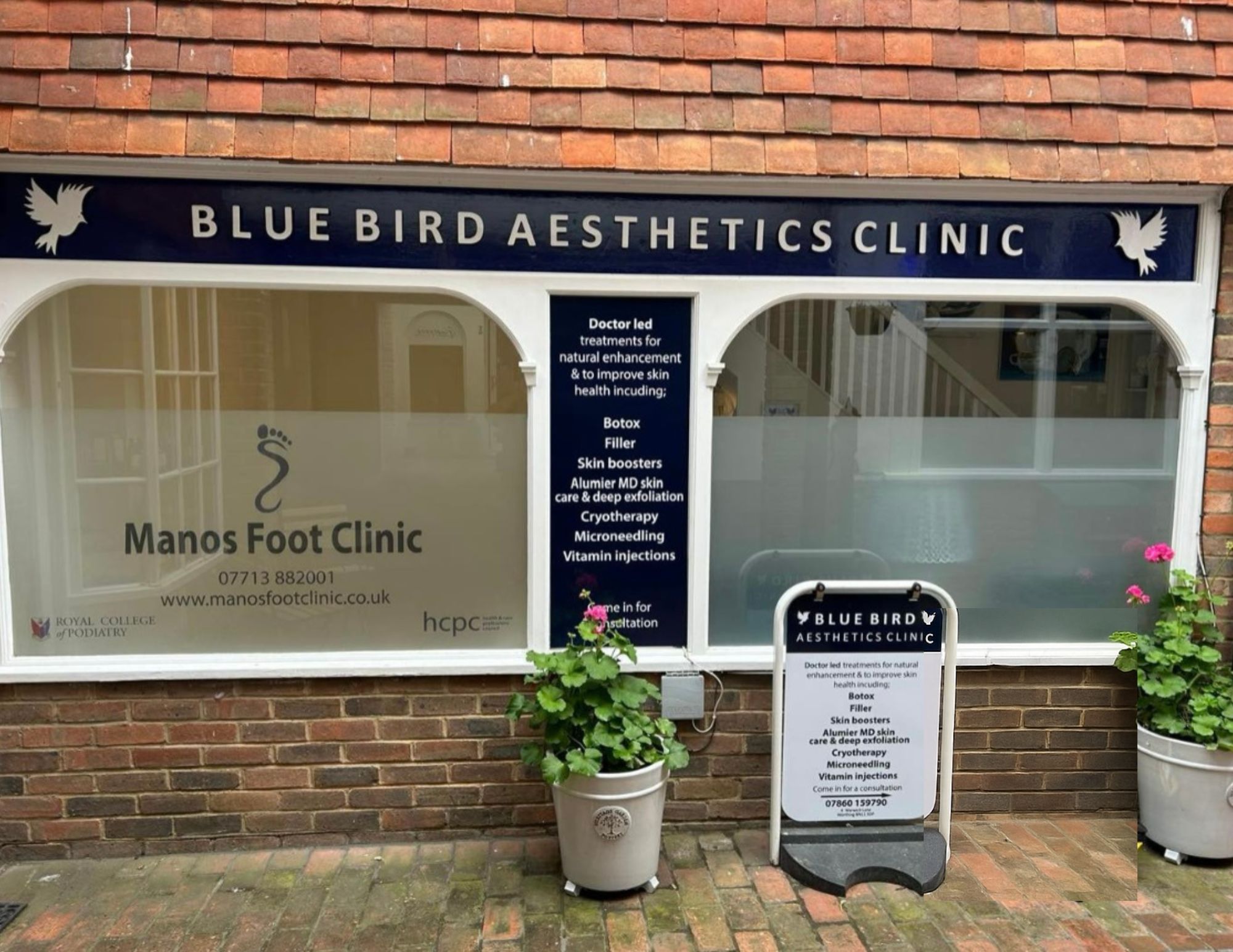
Doctor‑led medical aesthetics clinic in Worthing, West Sussex. Focused on enhancing natural beauty, improving overall skin quality and adhering to clinically safe treatment pathways.
Unsure where to start? Try our doctor-designed Treatment Finder Quiz