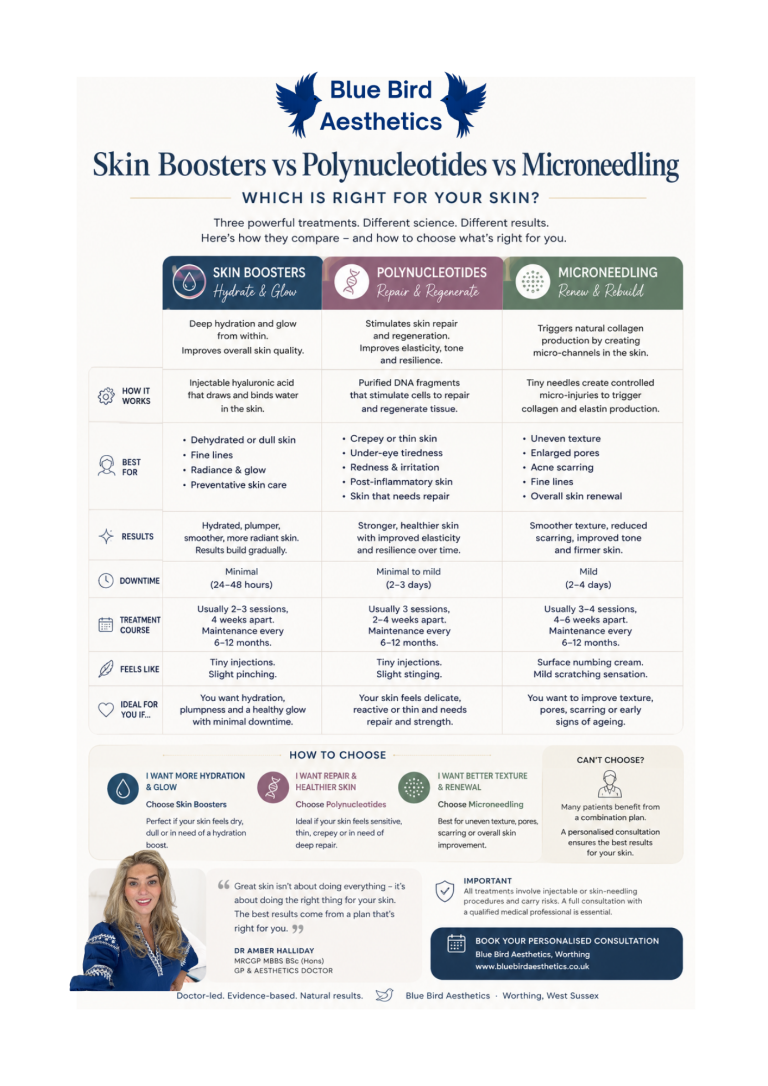
Microneedling in Worthing: A Doctor’s Guide to Skin Quality & Collagen Health
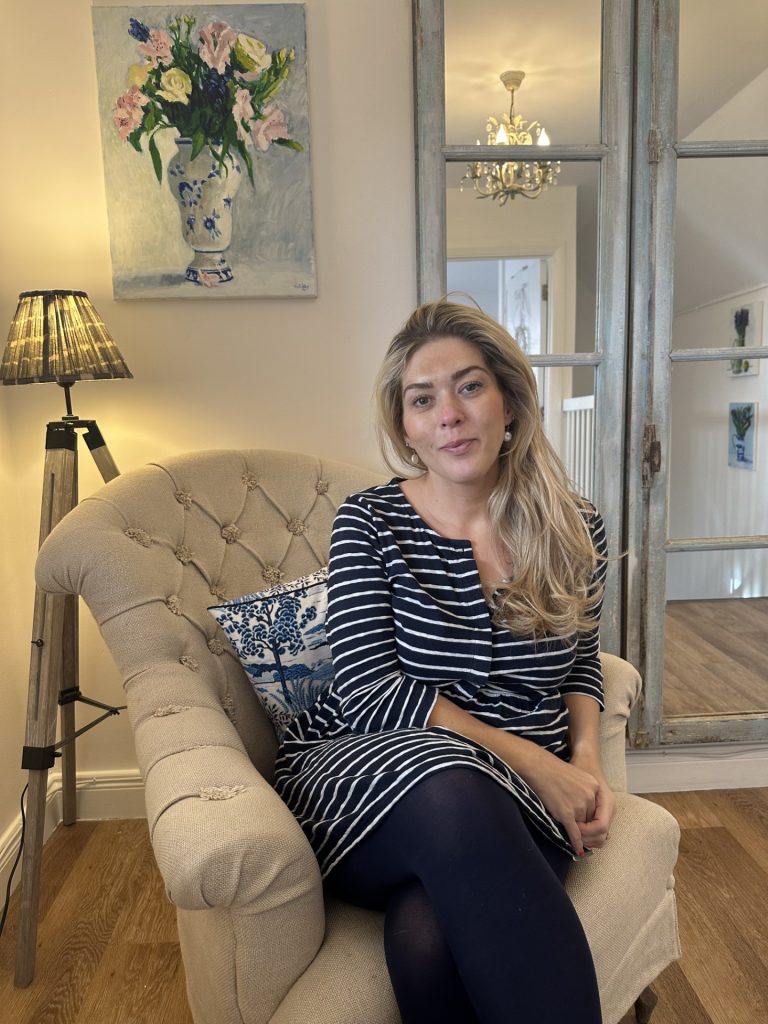
By Dr Amber Halliday, GP & Aesthetics Doctor | Blue Bird Aesthetics, Worthing | Updated 2026
TL;DR — Key Takeaways
| ✓ Microneedling stimulates your body’s own collagen — the results are natural, gradual and lasting. |
| ✓ Doctor-led treatment means the needle depth, serums and timing are all chosen for your specific skin. |
| ✓ Nanoneedling and Liquid Microneedling (Spicule Therapy) offer gentler, needle-free alternatives for sensitive or nervous patients. |
| ✓ Microneedling works well alongside skin peels, NeoGen Plasma, skin boosters and polynucleotides. |
| ✓ Most people are surprised by how comfortable the treatment feels — numbing cream is available if preferred. |
| ✓ A consultation at Blue Bird Aesthetics is always calm, commitment-free and clinically led. |
What Microneedling Actually Does — and Why It Works
Microneedling has become one of the most trusted evidence-based skin treatments available — not because of clever marketing, but because the science behind it is straightforward and robust.
The treatment uses tiny sterile needles to create controlled micro-channels in the skin. These channels trigger your body’s natural wound-healing response, stimulating fibroblasts to produce fresh collagen and elastin — the structural proteins responsible for firmness, smoothness and resilience.
Over time and across a course of treatments, this progressive collagen stimulation can meaningfully improve:
- Fine lines and superficial wrinkles
- Uneven skin texture and roughness
- Dullness and lack of radiance
- Mild pigmentation and uneven skin tone
- Early signs of skin laxity
- Superficial scarring, including mild acne scarring
It is a progressive treatment — results build gradually over several sessions, becoming more noticeable as the skin’s collagen architecture improves beneath the surface.
| “Microneedling isn’t about chasing perfection. It’s about supporting your skin to behave more like it did in your twenties — smoother, brighter and more resilient.” — Dr Amber Halliday, GP & Aesthetics Doctor at Blue Bird Aesthetics, Worthing. |
Three Approaches to Needling — Which Is Right for You?
Not all needling treatments are the same — and one of the advantages of a doctor-led clinic is being able to choose the right approach for your skin, your sensitivity, and your goals. At Blue Bird Aesthetics, we offer three distinct options:
1. Medical Microneedling
The most established approach: sterile, single-use needle cartridges create micro-channels at precisely controlled depths. The depth varies by facial zone and concern — for example, gentler settings over delicate areas, deeper settings for texture or scarring.
Medical microneedling is the highest-intensity option and delivers the most significant collagen stimulus. It is suitable for most skin types and all areas of the face, plus the décolletage and backs of the hands.
Explore the full treatment: Microneedling at Blue Bird Aesthetics
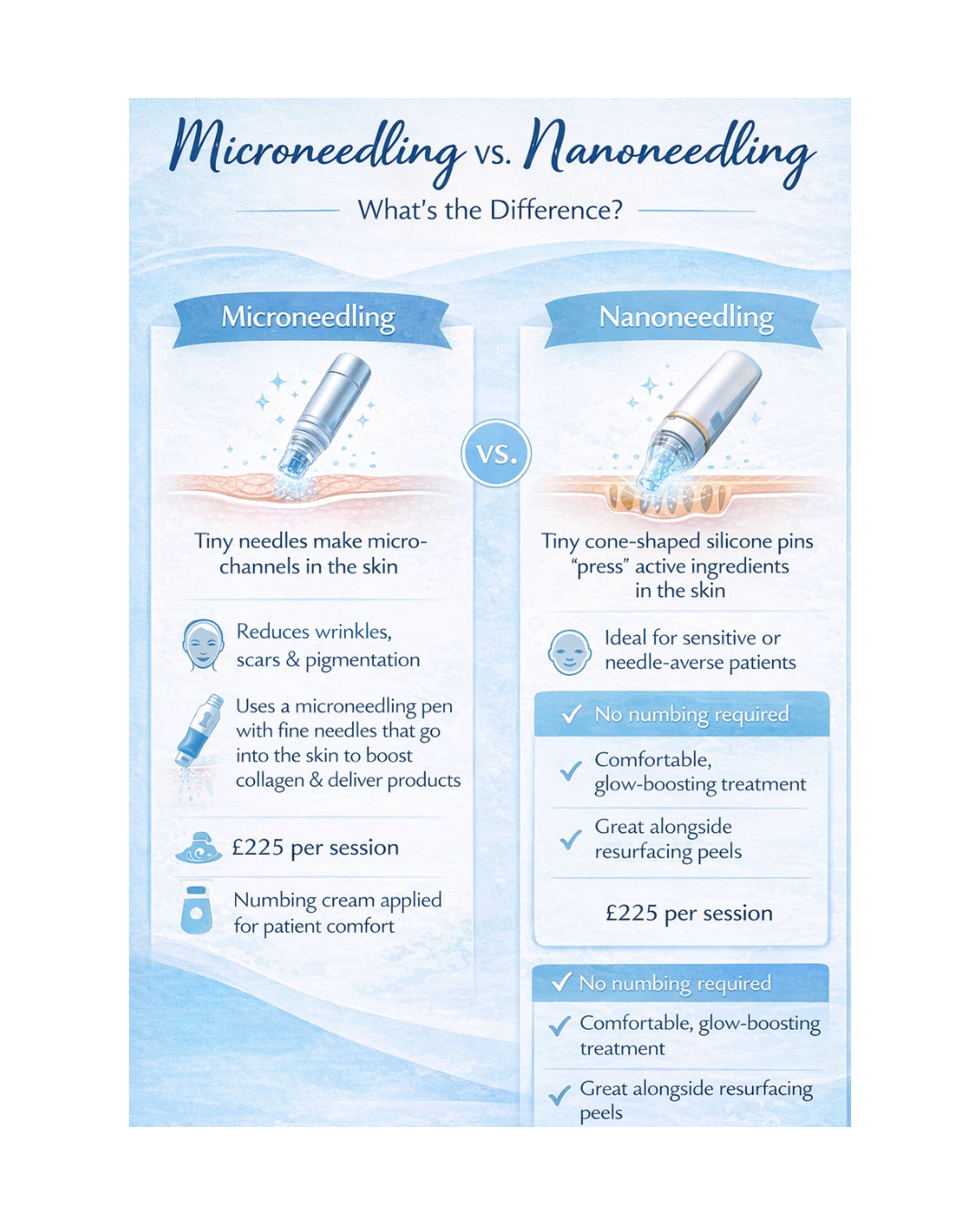
2. Nanoneedling — The Needle-Free Option
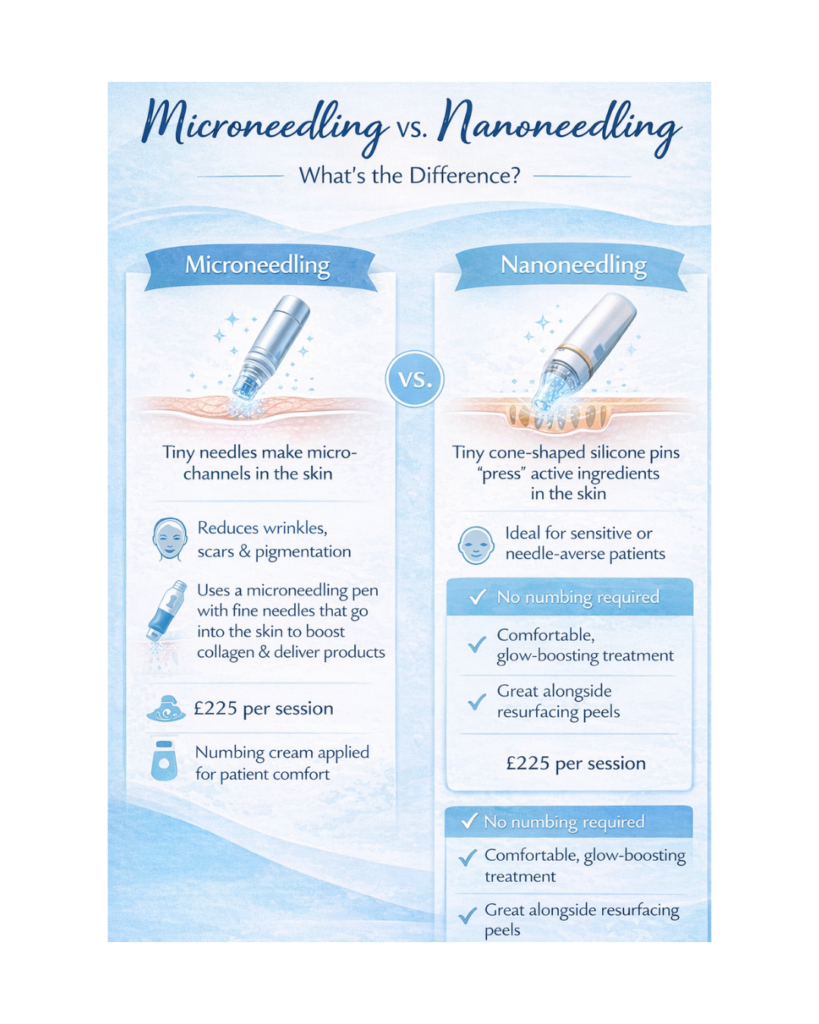
For those who prefer a needle-free approach, nanoneedling offers an ultra-gentle way to enhance skin health and radiance. Instead of traditional needles, the treatment uses soft, cone-shaped silicone pins to create superfine micro-channels on the skin’s surface. These channels allow active ingredients to absorb far more effectively, supporting a smoother, brighter complexion with no discomfort and no downtime.
| “I often describe nanoneedling as a pestle-and-mortar effect — the silicone pins act like the pestle, gently pressing active ingredients into the skin for a brighter, smoother finish.” — Dr Amber Halliday, GP & Aesthetics Doctor, Blue Bird Aesthetics |
Nanoneedling can be enjoyed as a standalone glow-boosting treatment or combined with other skin therapies for enhanced results. At Blue Bird Aesthetics, the approach is always calm, comfortable and tailored to your individual skin needs.
Nanoneedling may be particularly well suited if you:
- Prefer a completely needle-free experience
- Have sensitive or reactive skin
- Are new to clinic treatments and want a gentle introduction
- Want a comfortable maintenance treatment between more intensive sessions
- Have an event coming up and want zero downtime
| Nanoneedling at a Glance No numbing required • No needles • Comfortable and relaxing • Suitable for sensitive skin • No downtime • Ideal as a standalone glow treatment or in combination with other therapies |
3. Liquid Microneedling (Spicule Therapy)
Liquid Microneedling uses microscopic, needle-like ‘spicules’ derived from marine sponges to gently create superficial micro-channels in the skin. These tiny natural structures sit on the surface and gradually dissolve, encouraging gentle renewal while helping skincare ingredients absorb more effectively.
Because spicules work at a very shallow level, this treatment offers a lighter, low-downtime alternative to device-based microneedling. It provides gentle exfoliation, supports smoother texture, and is a good option for those who prefer a softer approach to skin rejuvenation.
Liquid Microneedling works well as:
- A first step for patients new to needling treatments
- A maintenance option between standard microneedling sessions
- A gentler alternative for skin that doesn’t tolerate deeper needling
- A complement to other treatments such as peels or skin boosters
Why Choose Doctor-Led Microneedling?
Microneedling is widely available in salons and beauty clinics, but the level of safety, precision and clinical reasoning varies enormously. In a medical environment, every decision is made with your skin barrier, your healing response and your long-term outcomes in mind.
| “The device is only half the story. The real difference comes from clinical judgement — choosing the right depth, the right serums, and the right timing for your skin.” — Dr Amber Halliday, GP & Aesthetics Doctor, Blue Bird Aesthetics |
At Blue Bird Aesthetics, your microneedling treatment includes:
- Sterile, single-use needle cartridges — opened in front of you at every appointment
- Tailored needle depth — calibrated per zone and per skin concern
- Medical-grade hygiene protocols, equivalent to clinical procedure standards
- Advanced serums chosen specifically for your skin: hyaluronic acid for hydration, polynucleotides for healing and tissue repair, Plinest for collagen stimulation
- Full pre- and post-treatment guidance from a qualified GP
| What This Means in Practice A doctor-led consultation before your first session assesses your skin barrier, your concern priorities, your lifestyle and any contraindications. This clinical groundwork is what separates a genuinely personalised treatment from a menu-based one. |
Microneedling vs Injectables — Which Is Right for You?
Patients often ask whether microneedling replaces injectables. The answer is that they do very different jobs — and for many patients, the best results come from combining them thoughtfully.
| Medical Microneedling | Injectables |
| Treats the entire face surface | Target specific concerns and depths |
| Improves texture, tone and radiance | Focused correction (lines, volume, hydration) |
| Stimulates collagen over time | Results visible from first treatment |
| Enhances penetration of medical-grade serums | Complement a wider skin health plan |
| Ideal for: dullness, texture, mild ageing | Ideal for: under-eye quality, defined lines, hydration |
Explore related injectable treatments:
– Skin Boosters in Worthing — deep hydration and skin quality from within
– Polynucleotides in Worthing — tissue regeneration and skin resilience
– Anti-Wrinkle Injections in Worthing — targeted line relaxation
How Microneedling Fits Into a Wider Skin Journey
Microneedling is an excellent foundation treatment for skin quality — but it works even better when combined thoughtfully with complementary therapies. Here’s how it sits within a wider skin health plan:
Microneedling + Skin Peels
Skin peels and microneedling are a natural pairing. Peels work on the surface layer — targeting dullness, pigmentation and texture through controlled acid exfoliation — while microneedling works deeper, stimulating collagen and enhancing ingredient absorption. Used in the right sequence, they complement each other to produce brighter, smoother, more even skin.
Explore: Resurfacing Skin Peels in Worthing
Microneedling + NeoGen Plasma Skin Regeneration
For patients looking for more dramatic resurfacing or tightening, NeoGen Plasma Skin Regeneration works at a deeper level — using nitrogen plasma to remodel the skin’s architecture more significantly than microneedling alone. Both treatments can be used together strategically as part of a longer-term skin plan, with NeoGen delivering structural change and microneedling providing ongoing collagen support in between.
Explore: NeoGen Plasma Skin Regeneration in Worthing
Microneedling + Skin Boosters or Polynucleotides
Microneedling opens micro-channels that allow medical-grade active ingredients to penetrate far more deeply than they could on their own. This makes it an ideal partner for skin boosters (for hydration and plumpness) and polynucleotides (for deep tissue regeneration). I often use polynucleotide serums during a microneedling session itself for a combined regenerative effect.
Explore: Skin Boosters in Worthing | Polynucleotides in Worthing
Beyond the Face: Décolletage & Hands
Microneedling is not limited to the face. Two areas that often reveal age prematurely — and that patients frequently overlook — are the décolletage and the backs of the hands.
- Décolletage — sun damage, crepiness and fine lines on the chest respond well to microneedling, particularly when combined with good SPF habits going forward
- Backs of the hands — thinning skin, visible veins and age-related texture changes can all be addressed with a tailored course of treatment
Treating these areas alongside the face creates a more harmonious, balanced result — rather than a well-tended face sitting above skin that tells a different story.
Who Benefits Most from Microneedling?
Microneedling works particularly well for patients who want natural, progressive improvement without dramatic downtime or an obvious ‘treated’ look. It suits people who prefer results that build gradually — improving month by month in a way that looks like genuinely healthy skin rather than a procedure.
If you’re looking for more dramatic tightening or resurfacing, NeoGen Plasma Skin Regeneration may be a more suitable option
It is also a strong option for patients who:
- Have tried high-street skincare and found it isn’t quite getting them the results they want
- Want to support their skin health proactively rather than reactively
- Are interested in reducing early signs of ageing without fillers or injectables
- Have concerns across the whole face (texture, tone, radiance) rather than one specific targeted issue
- Are new to clinic treatments and want something evidence-based and low-risk
Microneedling is suitable for most skin types, including sensitive skin with the right preparation and depth calibration.
Who Is Not Suitable for Microneedling?
A thorough consultation is essential before any needling treatment. Microneedling may not be appropriate in the following circumstances:
- Active skin infections, cold sores or open wounds in the treatment area
- Active acne with significant inflammation — though nanoneedling or spicule therapy may still be options
- Eczema, psoriasis or dermatitis in an active flare
- Rosacea with active redness or pustules
- Blood clotting disorders or anticoagulant medication
- Certain autoimmune conditions that affect skin healing
- Pregnancy or breastfeeding (particularly if using specific serums)
- Recent use of isotretinoin (Roaccutane) within the past 6–12 months
- Keloid scarring tendency — the risk of excessive scarring response must be assessed
- Compromised or recently sunburnt skin
If any of these apply to you, please mention them during consultation. In some cases an alternative treatment may be more appropriate; in others, a modified approach or different timing may make microneedling possible.
| A Note on Disclosure Please always share your full medical history, current medications and any supplements you take at consultation. This isn’t about adding barriers — it’s about making sure your treatment is as safe and effective as possible. As a GP, I assess this with the same thoroughness I would apply in a medical setting. |
What to Expect: Before, During and After
Before your treatment
Your skin will be double-cleansed and prepped. If you’d like numbing cream, this is applied 30–45 minutes before we begin. I’ll confirm the needle depth and serum choice for your session, and we’ll apply the chosen serum to the skin before and during treatment to work with the micro-channels as they’re created.
During the treatment
| “Most people are surprised by how comfortable microneedling feels. My job is to keep the treatment calm, predictable and tailored to your skin’s needs.” — Dr Amber Halliday, GP & Aesthetics Doctor, Blue Bird Aesthetics |
Most patients describe a mild scratching or light vibration sensation — not pain. Some areas of the face (around the forehead hairline, the upper lip) are more sensitive than others, and depth is adjusted accordingly. The treatment itself typically takes 30–45 minutes.
| “I was genuinely nervous going in, but it felt like a light scratching — absolutely fine. I couldn’t believe how calm it all felt.” — D H, Microneedling patient, Blue Bird Aesthetics Worthing |
After the treatment
Your skin will appear pink and may feel warm or tight immediately after, similar to mild sunburn. This typically settles within 12–24 hours. Some patients experience very mild swelling in the first day or so, particularly if a deeper depth was used.
Most people return to normal activities the following day. I’ll provide clear written aftercare guidance at every session, including what to use, what to avoid, and what to expect in the days that follow.
| Post-Treatment Skin Care For 24–48 hours after microneedling, keep your routine simple: gentle cleanser, a barrier moisturiser, and SPF 50 in the morning. Avoid strong actives (retinoids, vitamin C, AHAs/BHAs), heat (saunas, hot yoga, very hot showers), and makeup for at least 24 hours. Avoid swimming pools and sun exposure for one week. |
How Many Sessions Do You Need?
Most patients benefit most from a course of three sessions, spaced four to six weeks apart. This spacing allows each session to build on the collagen stimulus from the last, creating cumulative improvement over time.
After a course, many patients choose optional maintenance sessions every six to twelve months to sustain their results as part of an ongoing skin health plan.
For specific concerns such as acne scarring, a longer course (up to six sessions) may produce the best outcome. I’ll give you an honest, realistic guide at your consultation based on your starting point and goals.
Why Patients Choose Blue Bird Aesthetics
Choosing where to have a clinical skin treatment is a significant decision. Here are the things patients consistently tell us matter most to them:
| Doctor-led from start to finish | Your consultation, treatment and aftercare are all with Dr Halliday — a fully qualified GP with advanced aesthetics training. |
| Safety-first approach | Sterile equipment, full contraindication screening, medical-grade protocols. Patients tell us they feel genuinely safe, not just reassured. |
| A calm environment | No pressure, no upselling, no rushed appointments. The pace here is unhurried and genuinely patient-focused. |
| Honest, non-salesy advice | If microneedling isn’t right for you, you’ll be told — and offered the option that is. The consultation is a genuine clinical assessment, not a sales conversation. |
| Full skin health perspective | As a GP, Dr Halliday looks at your skin health as a whole — not just the concern you’ve come in about. |
Frequently Asked Questions
Does microneedling hurt?
Most patients describe a mild scratching or light vibration sensation — not pain. Numbing cream is available if you’d prefer it, applied 30–45 minutes before treatment begins. The level of sensation also varies by zone — forehead and cheeks tend to be very comfortable; the upper lip and hairline slightly more sensitive.
Is microneedling safe?
Yes — when performed in a medical environment with sterile equipment and proper clinical protocols. At Blue Bird Aesthetics, single-use cartridges are opened in front of you at every session, and full medical-grade hygiene standards are followed throughout.
Can it help with pigmentation?
Microneedling can help with mild pigmentation, particularly when combined with medical-grade brightening serums and appropriate peel treatments. For more significant pigmentation concerns, a combined approach (microneedling + peels, or alongside injectable skin boosters) often produces the best results. Fitzpatrick skin type is always factored in to ensure treatment is safe and appropriate.
Can I wear makeup afterwards?
Most patients can wear makeup again after 24–48 hours, depending on their skin’s response. Mineral-based makeup is the gentlest option while the skin is still settling. I’ll give you specific guidance at your appointment.
Can microneedling be combined with injectables?
Yes — and often with excellent results. Microneedling and injectables target different layers and different concerns, which means they complement each other well. The timing and sequencing matters (you wouldn’t typically have both on the same day), and I’ll advise on the ideal plan during your consultation.
What’s the difference between microneedling, nanoneedling and spicule therapy?
Microneedling uses fine sterile needles to create deeper micro-channels and deliver the strongest collagen stimulus. Nanoneedling uses soft silicone pins that work at the very surface — no needles, no downtime, ideal for sensitive skin or maintenance. Spicule therapy (Liquid Microneedling) uses natural marine sponge particles to create very superficial channels — a gentle, low-downtime option sitting between nanoneedling and traditional microneedling in terms of intensity.
What is the best age to start microneedling?
There’s no single answer — it depends on your skin and your goals. Many patients begin in their late twenties or thirties for proactive collagen support; others come later to address established texture concerns or early ageing. Microneedling is genuinely effective across a wide age range, and the best time to start is when the results matter to you.
Ready to explore microneedling?
A consultation at Blue Bird Aesthetics is calm, clinically led and completely commitment-free. It’s simply a chance to understand your skin, discuss your goals, and find out which approach — microneedling, nanoneedling, spicule therapy, or a combination — is the right fit for you. → Book a Consultation at Blue Bird Aesthetics
Further Reading & Useful Links
Treatments at Blue Bird Aesthetics:
– Microneedling at Blue Bird Aesthetics
– Resurfacing Skin Peels in Worthing
– NeoGen Plasma Skin Regeneration in Worthing
– Anti-Wrinkle Injections in Worthing
Guides:
– Ultimate Aesthetics Guide — A Safe Doctor-Led Starting Point
Blue Bird Aesthetics

Doctor‑led medical aesthetics clinic in Worthing, West Sussex. Focused on enhancing natural beauty, improving overall skin quality and adhering to clinically safe treatment pathways.