NeoGen Downtime Calculator — How Long Is Recovery?
NeoGen plasma skin regeneration heals in stages, and how long each stage lasts depends on the energy level used, the area treated, your skin tone and a few lifestyle factors. This page explains what actually happens to your skin week by week, and the calculator below gives you a personalised estimate so you can plan your diary before you book.
The four phases of NeoGen healing
Unlike ablative resurfacing, NeoGen leaves the outer skin layer intact while regeneration happens beneath it. That single difference shapes the whole recovery, and it is why the visible stages look the way they do.
- Inflammatory response — warmth, redness and tightness. The skin may look sunburned. This is an entirely expected response to plasma energy.
- Bronzing — the skin darkens to a tea-stain or bronzed appearance as treated tissue processes. Colour ranges from a warm tan to deep caramel depending on the energy used.
- Peeling — micro-flaking progresses to visible shedding, revealing fresh skin beneath. Peeling should be allowed to happen naturally and never assisted.
- Calming and regeneration — redness fades and early collagen results emerge. Improvement continues for three to six months after treatment.
Typical ranges by energy level
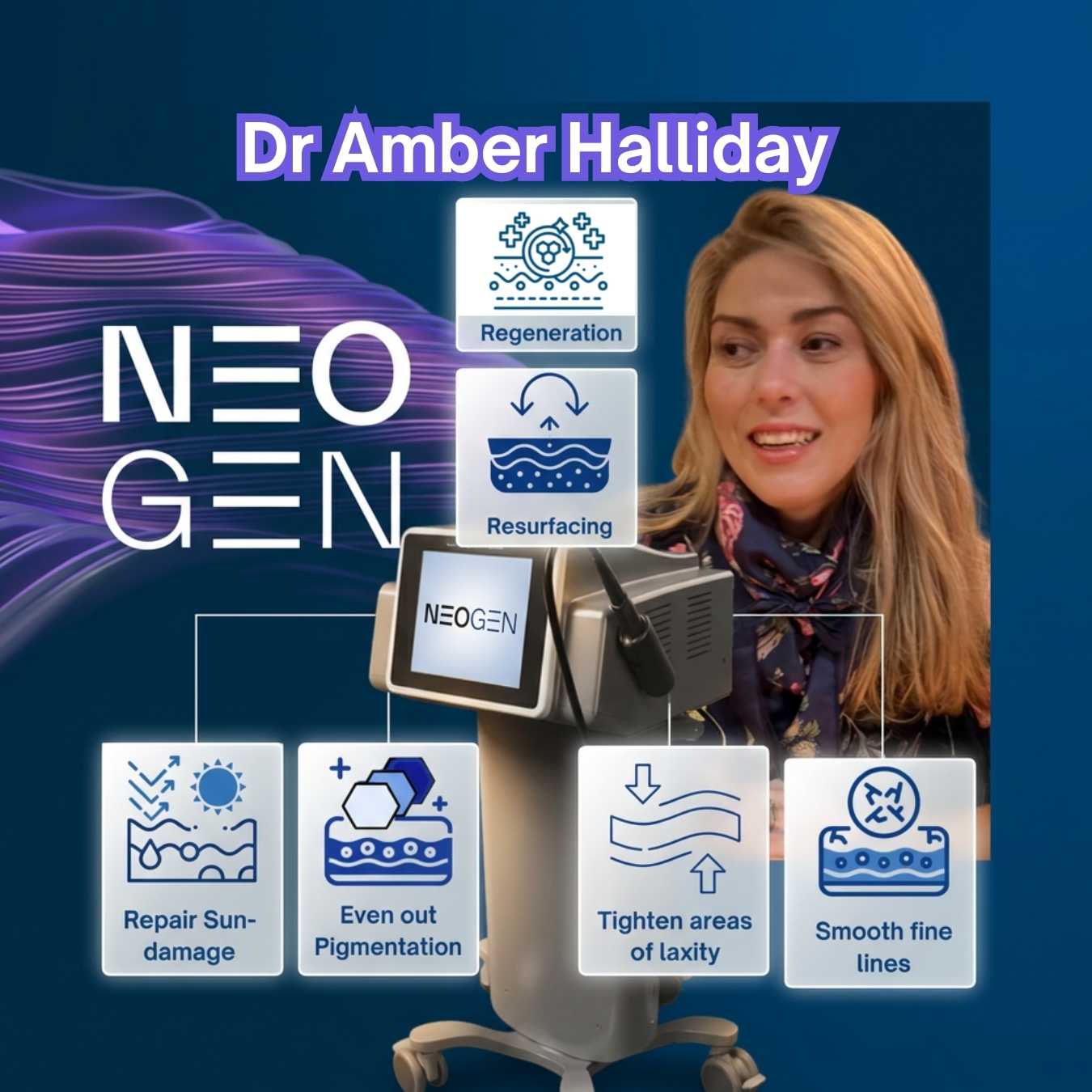
NeoGen is not a single fixed treatment. The energy level Dr Halliday selects determines how deep the thermal activity goes and how long your visible downtime lasts. These are the baseline ranges, in days, before individual factors are applied.
| Energy level | Redness | Bronzing | Peeling | Socially comfortable |
|---|---|---|---|---|
| Low | 1–2 days | 2–4 days | 2–4 days | 3–5 days |
| Medium | 1–3 days | 4–6 days | 4–6 days | 5–7 days |
| High | 2–4 days | 6–9 days | 6–9 days | 7–10 days |
Low energy suits maintenance and first-time patients who need to stay presentable. High energy is chosen where the priority is a more significant regenerative result and the diary allows for it. Which is appropriate for you is decided at consultation, not in advance.
What lengthens your timeline
- Skin tone. Higher Fitzpatrick types carry a greater potential for temporary post-inflammatory pigmentation. This is manageable, but it means conservative energy settings and a strict SPF protocol.
- Smoking or vaping. Both reduce skin oxygenation and impair collagen production, pushing estimates toward the higher end of each range. Avoiding both for at least seven days after treatment meaningfully supports recovery.
- Sun exposure. UV on healing skin can permanently compromise your result. SPF 50+ from day two, reapplied every two hours outdoors, is not optional.
- Picking at peeling skin. One of the most common causes of prolonged healing, scarring and pigmentation problems. Let the skin shed on its own.
Calculate your estimate
The calculator asks for your treatment energy level, the area being treated, your Fitzpatrick skin type and a few lifestyle factors, then produces a day-by-day timeline you can download or print and bring to your consultation.
Before you plan around these numbers
These estimates are educational and do not replace a consultation. Individual healing varies, and your actual energy level and protocol are agreed with Dr Halliday after a face-to-face assessment. If you are ever unsure whether your healing is normal — particularly redness spreading beyond day three, signs of infection, intense pain or unusually slow healing — contact the clinic.