How LED Light Therapy Works — A Doctor’s Explanation

By Dr Amber Halliday, MRCGP MBBS BSc (Hons) | Blue Bird Aesthetics, Worthing
✓ Medically reviewed by Dr Amber Halliday, MRCGP MBBS BSc (Hons)
LED is one of the gentlest tools we use at Blue Bird Aesthetics, and one of the most misunderstood — often confused with tanning beds or harsh at-home gadgets. Medical-grade LED is neither. Here’s what it actually does, and where it fits into a treatment plan.
What LED Light Therapy Actually Does
LED (Light Emitting Diode) therapy uses specific wavelengths of light to support the skin’s own natural repair processes. It’s non-invasive and pain-free, using no UV light and no heat, so it carries none of the tissue damage risk associated with more aggressive devices.
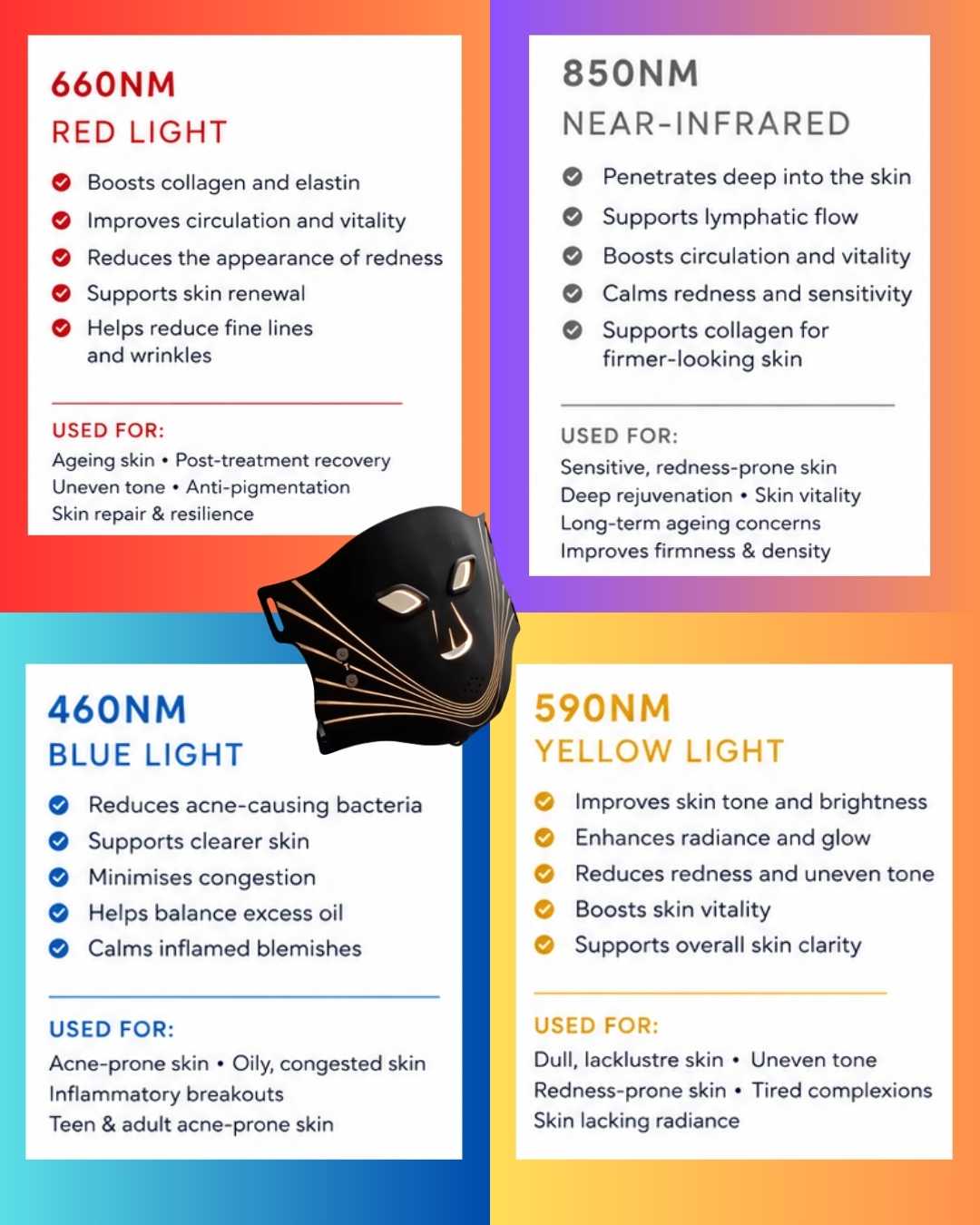
Different wavelengths penetrate the skin to different depths, where they can help support collagen production, calm redness and inflammation, and improve general skin radiance and texture.
Where LED Fits Into a Treatment Plan
LED isn’t a replacement for medical treatment — it’s a well-studied supportive therapy. We use it most often as an adjunct alongside NeoGen Plasma, microneedling, skin boosters, chemical peels, and cryotherapy, helping skin recover more comfortably and predictably afterwards.
Is It Right for You?
LED tends to suit people who want to support healing after a treatment, who experience redness or sensitivity, or who simply want a gentle, evidence-based option with no downtime. It may not be suitable if you have a photosensitive condition, are taking photosensitising medication, have an active skin infection, or have certain eye conditions — all of which we’ll check at consultation.
Pricing
Medical-grade LED is most often used as a supportive add-on. It costs £35 for 15 minutes, and Dr Halliday will confirm during your consultation whether it would benefit your particular treatment plan.
Curious whether LED would help your treatment plan?
Bring it up at your consultation and Dr Halliday will tell you honestly whether it’s likely to add value for you.
Continuing the Benefit at Home
If you’d like to keep supporting your skin between clinic visits, we’ve also written about the LW Silicon PRO LED Mask, the at-home device Dr Halliday recommends as a continuation of in-clinic LED — not a replacement for it.
Further Reading
Doctor‑led medical aesthetics clinic in Worthing, West Sussex. Focused on enhancing natural beauty, improving overall skin quality and adhering to clinically safe treatment pathways.
Unsure where to start? Try our doctor-designed Treatment Finder Quiz