The Blue Bird Treatment Ladder: What Really Shapes Our Pricing
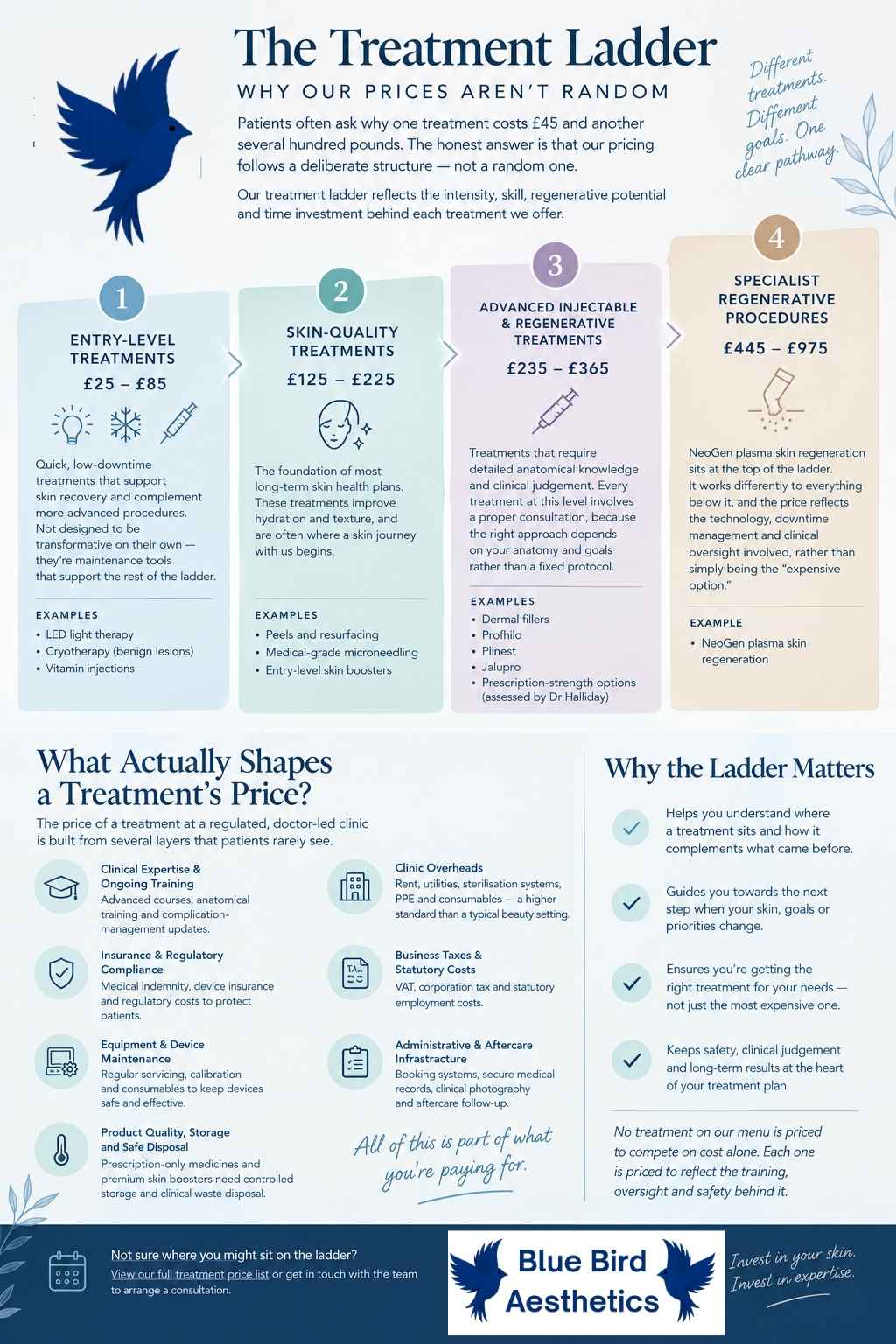
Patients occasionally ask why one treatment on our menu costs £45 and another costs several hundred pounds. It’s a reasonable question, and the honest answer is that our pricing follows a deliberate structure rather than a random one. We call it the treatment ladder, and it reflects the intensity, skill, regenerative potential and time investment behind each treatment we offer.
This article explains how that ladder works, and what actually sits behind the price of a treatment at a doctor-led clinic.
The Blue Bird Treatment Ladder
Rather than presenting our menu as a flat list, we think of it as four stages. Each stage builds on the one before it, and most patients move through more than one over time as their skin, goals and priorities change.
Entry-Level Treatments (£35–£95)
These are quick, low-downtime treatments that support skin recovery and complement more advanced procedures. This tier includes LED light therapy, cryotherapy for benign skin lesions, and clinically assessed vitamin injections. None of these are designed to be transformative on their own — they’re maintenance tools that support the rest of the ladder.
Skin-Quality Treatments (£125–£225)
This tier is the foundation of most long-term skin health plans. It covers peels and resurfacing treatments, medical-grade microneedling, and our entry-level skin boosters. These treatments improve hydration and texture, and are often where a skin journey with us begins.
Advanced Injectable and Regenerative Treatments (£265–£325)
Here we move into treatments that require detailed anatomical knowledge and clinical judgement: dermal fillers, Profhilo, Plinest and Jalupro, alongside prescription-strength treatments that Dr Halliday assesses and prescribes on an individual basis. Every treatment at this level involves a proper consultation, because the right approach depends on your anatomy and goals rather than a fixed protocol.
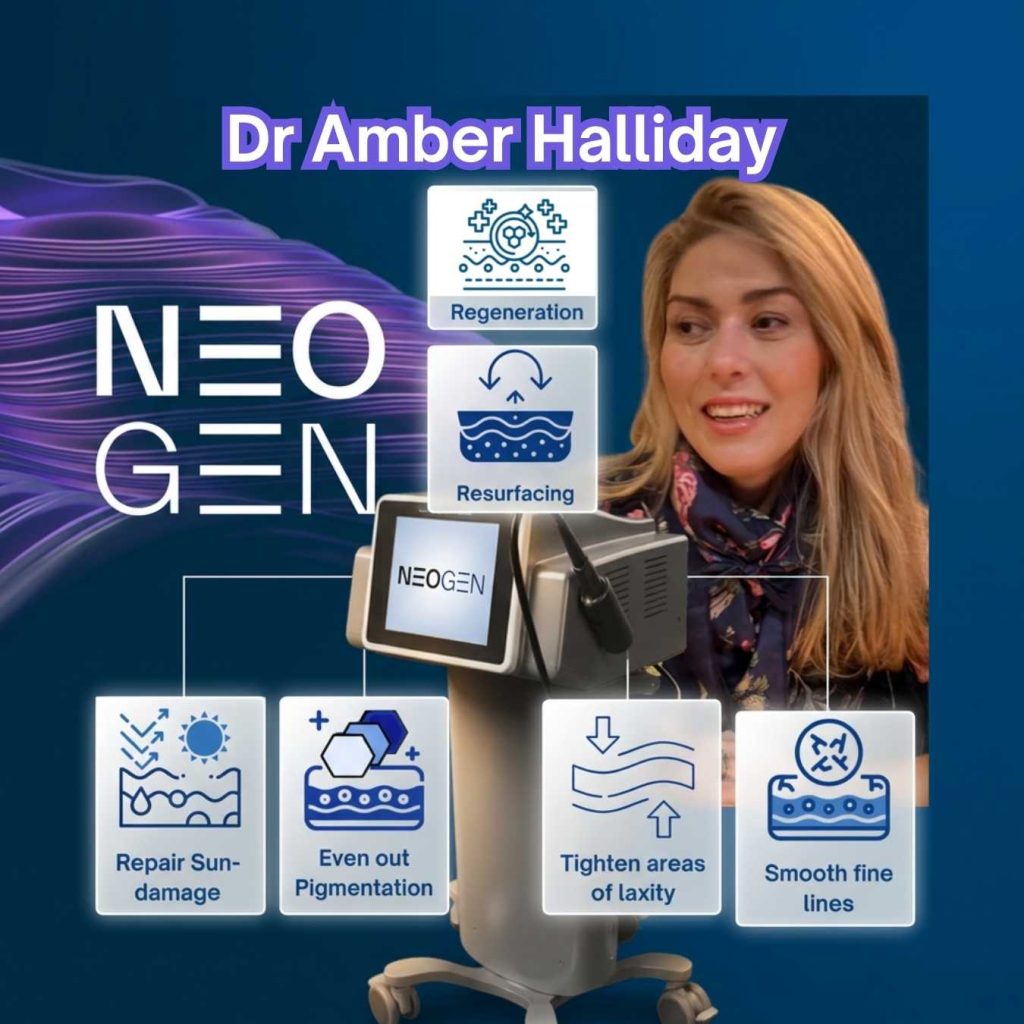
Specialist Regenerative Procedures (£495–£1,095)
NeoGen plasma skin regeneration sits at the top of the ladder. It works differently to everything below it, and the price reflects the technology, downtime management and clinical oversight involved, rather than simply being “the expensive option.”
What Actually Shapes a Treatment’s Price?
It’s tempting to compare aesthetic pricing the way you’d compare two bottles of the same product on a shelf. In reality, the price of a treatment at a regulated, doctor-led clinic is built from several layers that patients rarely see.
Clinical Expertise and Ongoing Training
Medicine doesn’t stand still, and neither does aesthetic practice. Dr Halliday and the team invest continually in advanced courses, anatomical training and complication-management updates. That ongoing education never appears on an invoice, but it’s built into every price on the menu.
Insurance and Regulatory Compliance
Medical indemnity cover, device insurance and regulatory compliance are non-negotiable for a doctor-led clinic. These costs exist to protect patients if anything ever needs to be put right, and they apply whether or not they’re ever called upon.
Equipment and Device Maintenance
Medical devices need regular servicing, calibration and consumables to perform safely and consistently. This is particularly true of technology-led treatments like NeoGen, our microneedling devices and our cryotherapy equipment, all of which require ongoing investment simply to remain in safe working order.
Product Quality, Storage and Safe Disposal
Prescription-only medicines and premium skin boosters require controlled, temperature-monitored storage and clinical waste disposal. Cutting corners here isn’t an option in a regulated setting, even though it’s rarely reflected in the headline price of a product.
Clinic Overheads: Rent, Utilities and Sterilisation
Rent, utilities, sterilisation systems, PPE and consumables all sit quietly behind every appointment. A clinical environment has to meet a higher standard than a typical beauty setting, and that standard carries a cost.
Business Taxes and Statutory Costs
Like any regulated healthcare business, Blue Bird also accounts for VAT, corporation tax and statutory employment costs. These are rarely part of a pricing conversation, but they’re as real as any other overhead.
Administrative and Aftercare Infrastructure
Booking systems, secure medical record keeping, clinical photography and aftercare follow-up all take time and infrastructure to run properly. None of it is visible during a short appointment, but all of it is part of what you’re paying for.
Why the Ladder Matters
A structured ladder isn’t just a pricing device — it’s a way of helping patients understand where a treatment sits, how it complements what came before it, and when it makes sense to progress to something more advanced. No treatment on our menu is priced to compete on cost alone. Each one is priced to reflect the training, oversight and safety behind it.
If you’d like help working out where you might sit on the ladder, you can view our full treatment price list or get in touch with the team to arrange a consultation.
A calm, doctor‑led consultation with Dr Amber Halliday can help you understand which treatment is clinically appropriate for your skin, your goals and your medical history.
Frequently Asked Questions
Why do treatments vary so much in price?
Pricing reflects the skill, training, regulation, equipment, product quality and clinical oversight required for each treatment. Entry‑level treatments are quick and low‑downtime, while advanced and regenerative treatments require deeper anatomical knowledge and medical judgement.
Is a more expensive treatment always better?
Not necessarily. The right treatment depends on your skin, goals and medical history — not the price. Many patients begin with skin‑quality treatments before progressing to more advanced options.
What does “prescription‑strength” mean?
Some treatments require a medical prescription and can only be provided after a doctor‑led assessment. These are prescribed individually by Dr Halliday when clinically appropriate.
Do all treatments require a consultation?
Entry‑level treatments often do not, but anything involving injectables, prescription‑strength products or regenerative technology requires a full consultation to ensure safety and suitability.
Why are doctor‑led clinics more expensive than beauty settings?
Doctor‑led clinics operate under medical regulation, with higher standards for training, insurance, equipment, sterilisation, record‑keeping and complication management. These safeguards are built into the price of every treatment.
How do I know where I sit on the treatment ladder?
Your consultation will map out where you are now, what your skin needs, and which tier of the ladder is appropriate. Most patients move through more than one tier over time as their skin and goals evolve.
Further Reading
- Sunekos: Under‑Eye & Skin‑Quality Treatment
- Plinest Polynucleotides: Regenerative Skin Support
- Jalupro: Amino‑Acid Skin Booster
- Profhilo: Bio‑Remodelling Hydration
- NeoGen Plasma Skin Regeneration
- How to Choose a Safe Aesthetics Clinic
- How to Book via GlowDay
Doctor‑led medical aesthetics clinic in Worthing, West Sussex. Focused on enhancing natural beauty, improving overall skin quality and adhering to clinically safe treatment pathways.
Unsure where to start? Try our doctor-designed Treatment Finder Quiz