Sunekos vs Polynucleotides vs Profhilo vs Jalupro: Which Is Best for Under-Eyes?
If you’ve been researching under-eye treatments, you’ve probably run into four names that all sound similar but aren’t the same thing: Sunekos, polynucleotides, Profhilo and Jalupro. Patients often arrive at consultation unsure whether these are competing options, different strengths of the same thing, or something else entirely. This guide sets out honestly how they differ, where each tends to be a good fit, and where the differences matter less than you might think.
Why under-eyes behave differently
The under-eye area has thinner skin, less structural support and a tendency to show dehydration, tiredness and early ageing changes more quickly than other parts of the face. This is why treatments that work beautifully on the cheeks or jawline don’t always translate directly to the under-eye — and why choosing the right modality matters.
What each treatment actually is
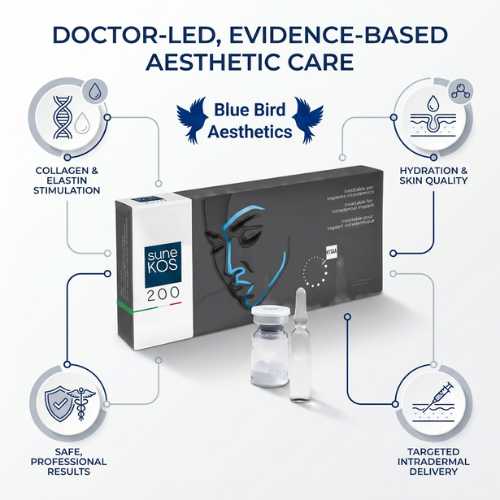
Sunekos is an injectable blend of amino acids and hyaluronic acid, designed to support the skin’s own production of collagen and elastin. See our full guide to Sunekos for how the treatment itself works.
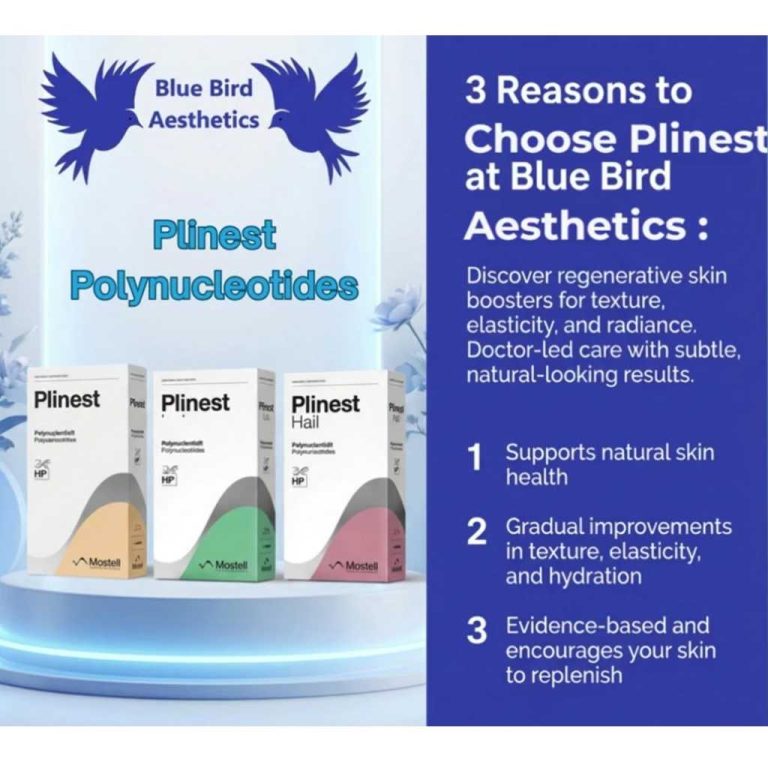
Polynucleotides are DNA-derived fragments used to support tissue repair, hydration and general skin quality, particularly in areas where the skin is thin and prone to visible ageing changes — our polynucleotides under eyes guide covers this in detail.
Profhilo is a specific, highly stabilised hyaluronic acid product used for skin bio-remodelling and hydration, generally across broader areas of the face rather than as a targeted under-eye treatment — see our Profhilo Worthing page.
Jalupro is another amino acid and vitamin-based skin booster, broadly in the same category as Sunekos but a different specific formulation and manufacturer — see our Jalupro Worthing page.
None of these are dermal fillers, and none of them add volume — that distinction matters, and we come back to it below.
Although this guide focuses on the under‑eye area — where differences between these treatments matter most — Sunekos is also used more broadly for improving skin quality on the face, neck, décolletage and hands. The comparisons here apply specifically to under‑eye concerns, not to every area Sunekos can treat.
Sunekos vs polynucleotides for under-eyes
Both are regenerative, skin-quality-focused options that are commonly used around the eyes, and neither is universally “better” than the other. Polynucleotides are sometimes favoured where hydration and tissue repair are the primary concern, particularly for very thin or reactive under-eye skin. Sunekos’s amino acid and hyaluronic acid combination is sometimes favoured where supporting collagen and elastin production is the priority. In practice, the right choice depends on an assessment of your specific skin at consultation — we wouldn’t recommend either on the strength of a general comparison alone.
Sunekos vs Profhilo
These serve different goals.
Profhilo improves overall hydration and skin quality across broader facial areas.
Sunekos is more targeted and often chosen specifically for the under-eye area.
Some patients use both as part of a broader skin plan rather than choosing one over the other — this is a conversation worth having at consultation.
Sunekos vs Jalupro
Sunekos and Jalupro sit in a similar category — both are amino-acid-based skin boosters — but they’re different specific formulations from different manufacturers, with differences in exact composition and how they’re delivered. We wouldn’t present one as universally superior to the other; where we have a preference for your particular skin, we’ll explain why at consultation.
Filler vs Sunekos — why they’re not interchangeable
This distinction trips a lot of patients up.
Dermal filler adds structural volume;
Sunekos, polynucleotides, Profhilo and Jalupro all improve skin quality without adding volume.
This matters particularly for tear trough concerns, where filler is often the first thing patients ask about. We don’t offer tear trough filler at Blue Bird — our page on why we don’t offer tear trough filler explains our reasoning — and for texture-related under-eye concerns, a skin-quality treatment like Sunekos or polynucleotides is often what we’d discuss instead, depending on what’s actually driving your concern.
NeoGen vs these injectable options
NeoGen Plasma is a different category entirely — a resurfacing treatment using controlled thermal energy, rather than an injectable. It’s sometimes used alongside, rather than instead of, treatments like Sunekos as part of a broader plan, since it addresses skin texture and surface quality rather than the same mechanisms as an injectable skin booster. Our NeoGen Plasma guide covers how it works.
What we look for at consultation
To decide between these options, we assess:
skin thickness and elasticity
hydration levels
presence of crepiness or fine lines
pigmentation vs structural hollowing
your medical history and skin sensitivity
your timeline and tolerance for downtime
This is why a comparison page can guide you, but not replace a consultation.
Cost and course differences
Rather than quoting figures here that can change, current pricing and course structure for each treatment is set out on the individual pages: Sunekos pricing, Profhilo pricing, and Jalupro pricing. In general, these treatments are given as a short course rather than a single session, with maintenance sessions afterwards — we’ll set out a specific plan and cost at consultation.
How long do results last?
Longevity varies by individual, by treatment, and by the area treated, so we’d avoid quoting a single figure that applies to everyone. As a general principle, these are skin-quality treatments maintained with periodic top-up sessions, rather than one-off procedures with a fixed “expiry date.” We’ll talk through a realistic maintenance schedule for your specific treatment at consultation.
Which is right for you?
If your priority is… | Options commonly considered |
Hydration and general skin quality across the face | Profhilo, polynucleotides |
Targeted under-eye skin quality | Sunekos, polynucleotides |
Supporting collagen and elastin production | Sunekos, Jalupro |
Adding volume | Neither — dermal filler is a different treatment category |
Improving surface texture and resurfacing | NeoGen Plasma (a different modality) |
This is a starting point for a conversation, not a substitute for one — the right option genuinely depends on an assessment of your skin, your goals, and your medical history.
When none of these are the right fit
Sometimes the concern isn’t best treated with injectables at all — for example:
structural hollowing
significant pigmentation
prominent fat pads
severe laxity
medical conditions affecting the skin
In these cases, we’ll explain why and discuss alternatives rather than recommending a treatment that won’t help.
Ready to find out which option is right for your under‑eyes?
A calm, doctor‑led consultation with Dr Amber Halliday can help you understand which treatment — Sunekos, polynucleotides, Profhilo, Jalupro or a different approach entirely — is clinically appropriate for your skin, your goals and your medical history.
Frequently asked questions
Is Sunekos the same as polynucleotides?
No — they’re different products with different mechanisms, though both are regenerative, skin-quality-focused treatments often used around the eyes.
Is Profhilo better than Sunekos?
Neither is universally better — they tend to suit different goals, and the right choice depends on your specific skin and priorities.
Can I have filler instead of Sunekos for under-eye hollows?
Filler and Sunekos address different things — filler adds volume, Sunekos improves skin quality. We don’t offer tear trough filler at Blue Bird; we’ll discuss what’s actually driving your concern before recommending an approach.
Is Jalupro basically the same as Sunekos?
They’re in a similar category but are different specific formulations — the practical differences are usually smaller than the marketing suggests, and either can be a good fit depending on your skin.
Should I combine NeoGen with Sunekos?
Some patients do, since they work on different aspects of skin quality — this is worth discussing as part of an overall plan at consultation.
Doctor’s summary
Sunekos, polynucleotides, Profhilo and Jalupro all fall into the broad category of regenerative skin-quality treatments — none of them add volume, and none is straightforwardly “the best” for every patient. The right choice comes down to your specific skin, your goals, and an honest conversation about what each treatment can and can’t do, not a ranking on a page.
— Dr Amber Halliday, Clinical Lead, Blue Bird Aesthetics
Further Reading
- Sunekos Under‑Eye Recovery: Swelling, Bruising & Day‑By‑Day Healing
- Plinest Polynucleotides: How They Work for Eyes, Face & Hair
- Profhilo: Hydration, Glow & Bio‑Remodelling Explained
- Jalupro: Amino‑Acid Skin Booster for Fine Lines & Crepiness
- NeoGen Plasma: Doctor‑Led Guide to Eyes, Texture & Regeneration
Doctor‑led medical aesthetics clinic in Worthing, West Sussex. Focused on enhancing natural beauty, improving overall skin quality and adhering to clinically safe treatment pathways.
Unsure where to start? Try our doctor-designed Treatment Finder Quiz