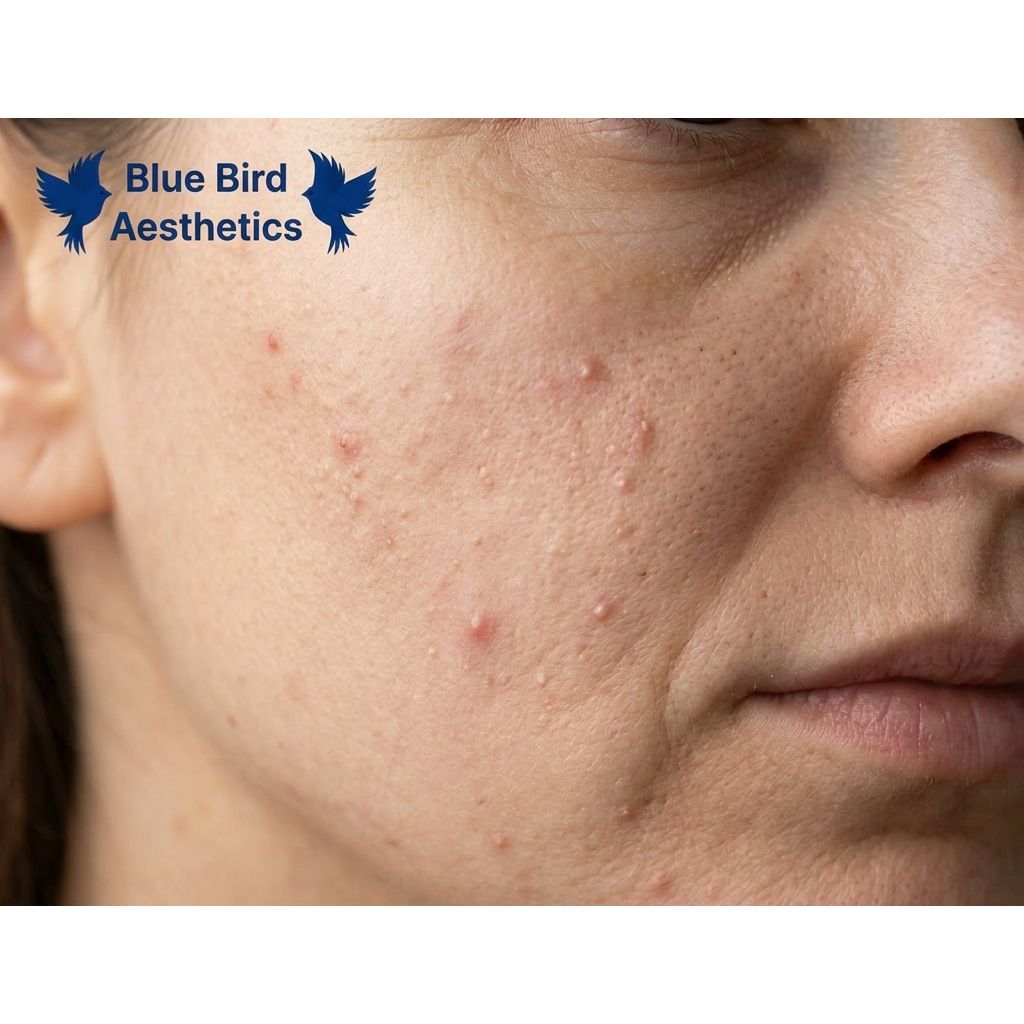
Hormonal Acne in Your 30s and 40s: A GP’s Approach
Why adult acne is a barrier problem as much as a hormone one — and the doctor-led routine that calms it down.
By Dr Amber Halliday, MRCGP MBBS BSc (Hons) — GP & Aesthetics Doctor | Blue Bird Aesthetics, Worthing | Updated 2026
Adult acne is more common than people admit, and more wearing. If you are dealing with breakouts in your thirties or forties, the first thing worth knowing is that this is not teenage acne grown up — and the approach that may have worked at 15 is often making it worse now.
Most adult acne I see is not an oil problem — it is a barrier problem. We are taught to strip the skin, and stripping is what keeps it inflamed.
— Dr Amber Halliday
Who This Guide Is For
- Anyone with persistent breakouts in their 30s or 40s.
- People whose ‘drying’ routines do not seem to be working.
- Anyone worried about acne scarring.
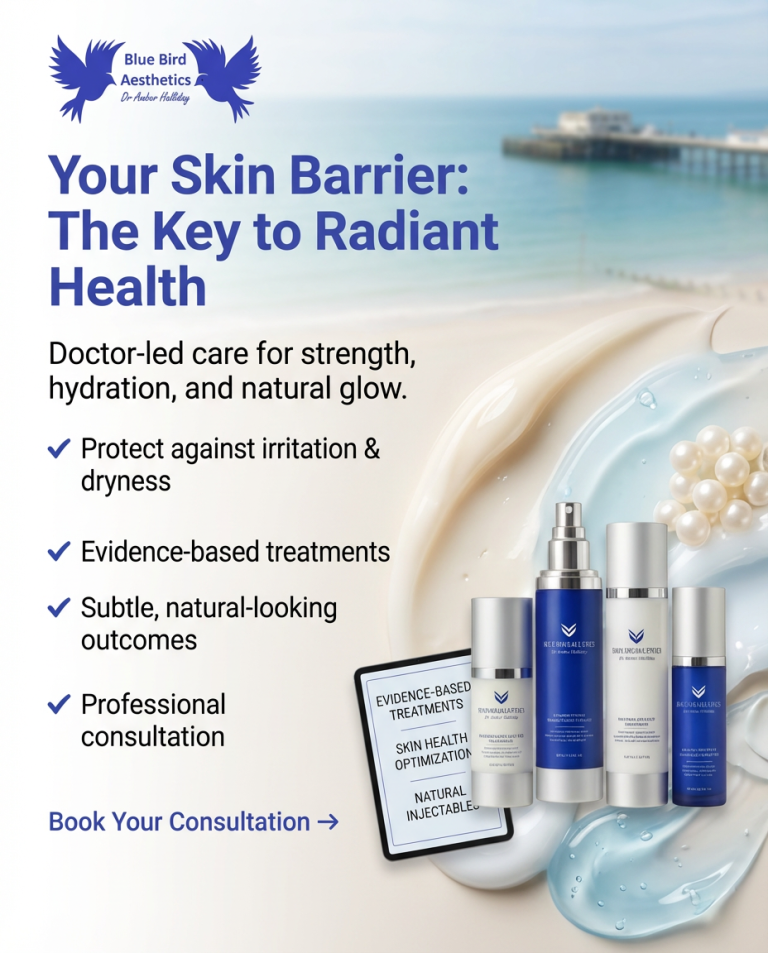
- Those wanting a doctor-led, barrier-first approach in Worthing.
TL;DR — Key Takeaways
Short on time? Here’s the summary:
✓ Adult acne tends to involve bacterial overgrowth and a damaged barrier, not just excess oil.
✓ Over-drying products can worsen it — stripped skin makes more oil and stays inflamed.
✓ My first step is usually to repair the barrier, including adding a non-comedogenic moisturiser.
✓ Double cleansing and a physical SPF with zinc or titanium help reduce breakouts.
✓ As a GP, I can discuss hormones and prescribe topical treatment where appropriate.
✓ The pill or HRT is a conversation for your own GP — I can help you prepare for it.
1. How adult acne is different
Adult acne rarely just disappears the way teenage acne eventually does, which means people are living with ongoing soreness and a real risk of scarring. Clinically, it tends to involve bacterial overgrowth sitting on the skin rather than being purely oil-driven — and the emotional weight of it, year after year, should not be underestimated.
2. The barrier mistake
Here is the part that changes everything: in most of the adult acne I see, the barrier between the bacteria and the deeper skin is poor, because the products being used are designed to strip oil away. Stripped skin feels dry in places, panics, and produces more oil — and the cycle continues. The counter-intuitive fix is to stop stripping and start supporting.
The change that surprises people most
Moisturising acne-prone skin. People resist it, but a good non-comedogenic, non-oil-based moisturiser can make an enormous difference to skin that has been over-stripped.
3. My barrier-first approach
Where I usually start:
- A non-comedogenic, non-oil-based moisturiser to rebuild the barrier.
- Double cleansing, morning and evening, to clear what settles in pores through the day.
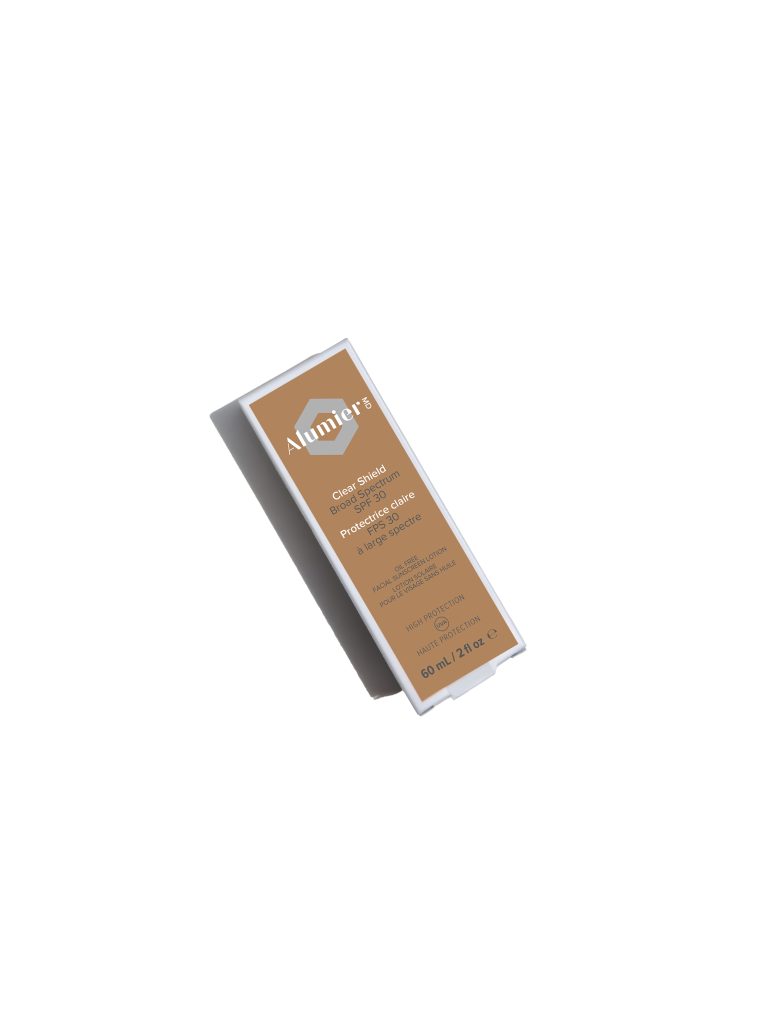
- A physical SPF with zinc or titanium — both are naturally antibacterial and help reduce breakouts while protecting the barrier.
- Easing off the harsh, drying actives that have been keeping the skin inflamed.
4. What can make it worse
Many popular over-the-counter and social-media routines are simply too drying. Some harsh products can help in the short term, but only alongside serious barrier support — used alone, they tend to trap skin in the strip-and-rebound cycle. Gentler, skin-aware products usually win in the long run.
5. Where being a GP helps
Because I work in skin as a doctor, I can do more than recommend creams. I can discuss the hormonal picture and, where appropriate, prescribe topical treatment as I would in general practice. If the right answer involves the contraceptive pill or HRT, that is a conversation for your own GP — but I can tell you what to ask for, which tends to make the transition into the NHS system much smoother.
Working in skin as a GP means I can treat the surface and talk sensibly about what sits beneath it — then hand the right parts back to your own GP.
— Dr Amber Halliday
6. Thinking ahead to scarring
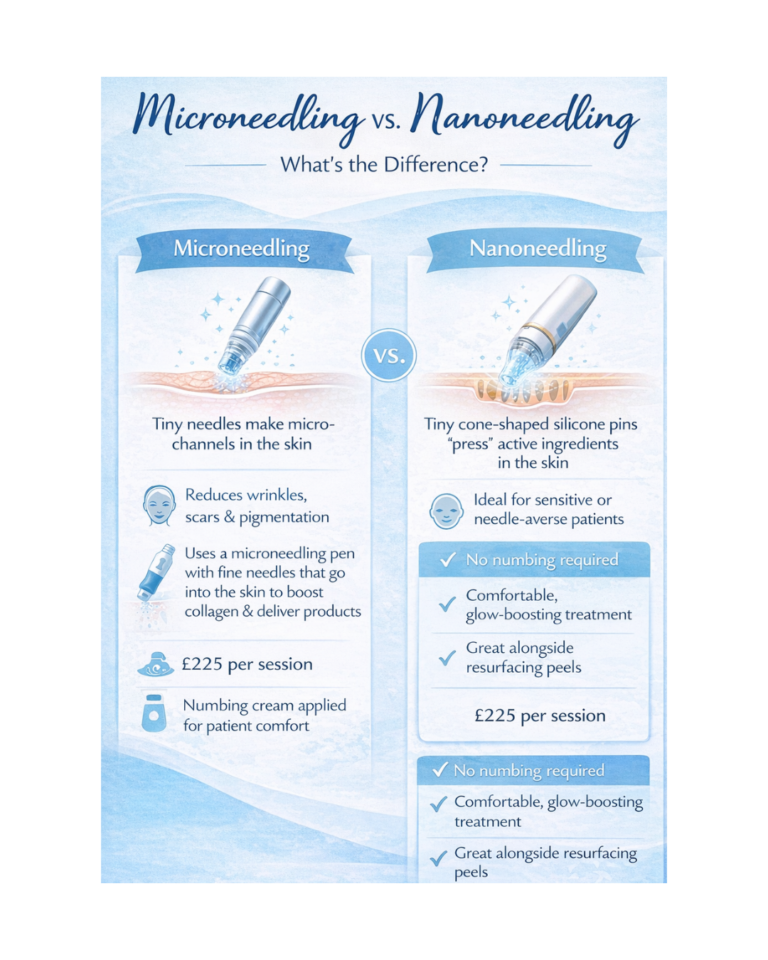
If acne has already left scarring, that can be addressed once the skin is calm — most often with microneedling and, for thicker scars, regenerative treatments. I cover this in detail in my guide to microneedling for acne scarring.
Frequently Asked Questions
Is adult acne hormonal?
It often has a hormonal component, but in clinic I see it driven as much by bacterial overgrowth and a damaged skin barrier as by hormones alone.
Why did I get acne in my 30s or 40s?
Adult acne is common and multifactorial — hormones, bacteria and an over-stripped barrier all play a part. It is not a failure of hygiene.
Should I moisturise if my skin is oily and acne-prone?
Usually yes. A non-comedogenic moisturiser helps rebuild a stripped barrier, which often reduces the excess oil that stripping causes.
Does drying my skin out clear acne?
Rarely for long. Over-drying tends to make skin produce more oil and stay inflamed. Supporting the barrier works better.
What SPF is best for acne-prone skin?
A physical SPF with zinc or titanium — both are naturally antibacterial and protect the barrier while reducing breakouts.
Can you prescribe for my acne?
As a GP working in skin, I can prescribe topical treatment where appropriate, and discuss the hormonal picture with you.
Should I go on the pill or HRT for my skin?
That is a decision for your own GP. I can advise what might be worth asking about, so your conversation with them is more productive.
Will adult acne scar?
It can, which is part of why calming it matters. Scarring can be treated later once the skin is settled.
How long until I see improvement?
Barrier repair often shows in a few weeks, but skin works gradually — give a new approach a couple of months of consistency.
The Takeaway
Adult acne is rarely solved by attacking it harder. The shift that helps most people is counter-intuitive: stop stripping, rebuild the barrier, cleanse properly, protect with a mineral SPF, and let the skin calm down.
And because I am a GP, the hormonal side of the picture does not get ignored — it gets discussed, and pointed in the right direction.
If adult acne is wearing you down, a consultation is a calm place to start putting it right.
Ready to talk it through?
Book a calm, considered, commitment-free consultation in Worthing.
We’ll look at your skin and your routine, and build a barrier-first plan that calms breakouts — with no pressure to buy.