At-Home Microneedling: Is a Dermaroller Safe, and How Does It Compare with Clinic Treatment?
Dermarollers and microneedling pens are sold widely for home use, and they look like a cheaper way to get a clinic result. They are not the same thing. This is what at-home microneedling can and cannot do, the risks I see, and how to stay safe if you use a home device.
By Dr Amber Halliday, MRCGP MBBS BSc (Hons) | GP and aesthetic doctor | Blue Bird Aesthetics, Worthing | Last reviewed October 2026
Key points
- Home devices use short needles that mainly help skincare absorb. They cannot safely reach the depth that clinic microneedling uses to stimulate collagen.
- The main risks are infection, irritation, pigmentation and scarring, and rarely serious reactions when non-sterile products are pushed into the skin.
- Rollers enter and leave the skin at an angle, they blunt quickly and they cannot be properly sterilised at home.
- Clinic microneedling uses sterile, single-use needles, adjustable depth, a medical assessment and an aftercare plan.
- Do not microneedle at home if you have active acne, rosacea, eczema, cold sores, a skin infection or a tendency to scar.
What microneedling does
Microneedling creates thousands of tiny, controlled channels in the skin. The skin responds as it would to any small injury, by repairing itself and making new collagen and elastin. How deep the needles go, how evenly they work and how clean the process is decide whether you get a useful result or just irritated skin. My Microneedling page or my guide to how microneedling works explains the science in more detail.
How home devices differ from clinic treatment
| Home roller or pen | Clinic microneedling | |
|---|---|---|
| Needle depth | Fixed and short | Typically 0.5 to 2.5 mm, adjusted for each area |
| Sterility | Reused and hard to clean properly | Sterile, single-use needle cartridge |
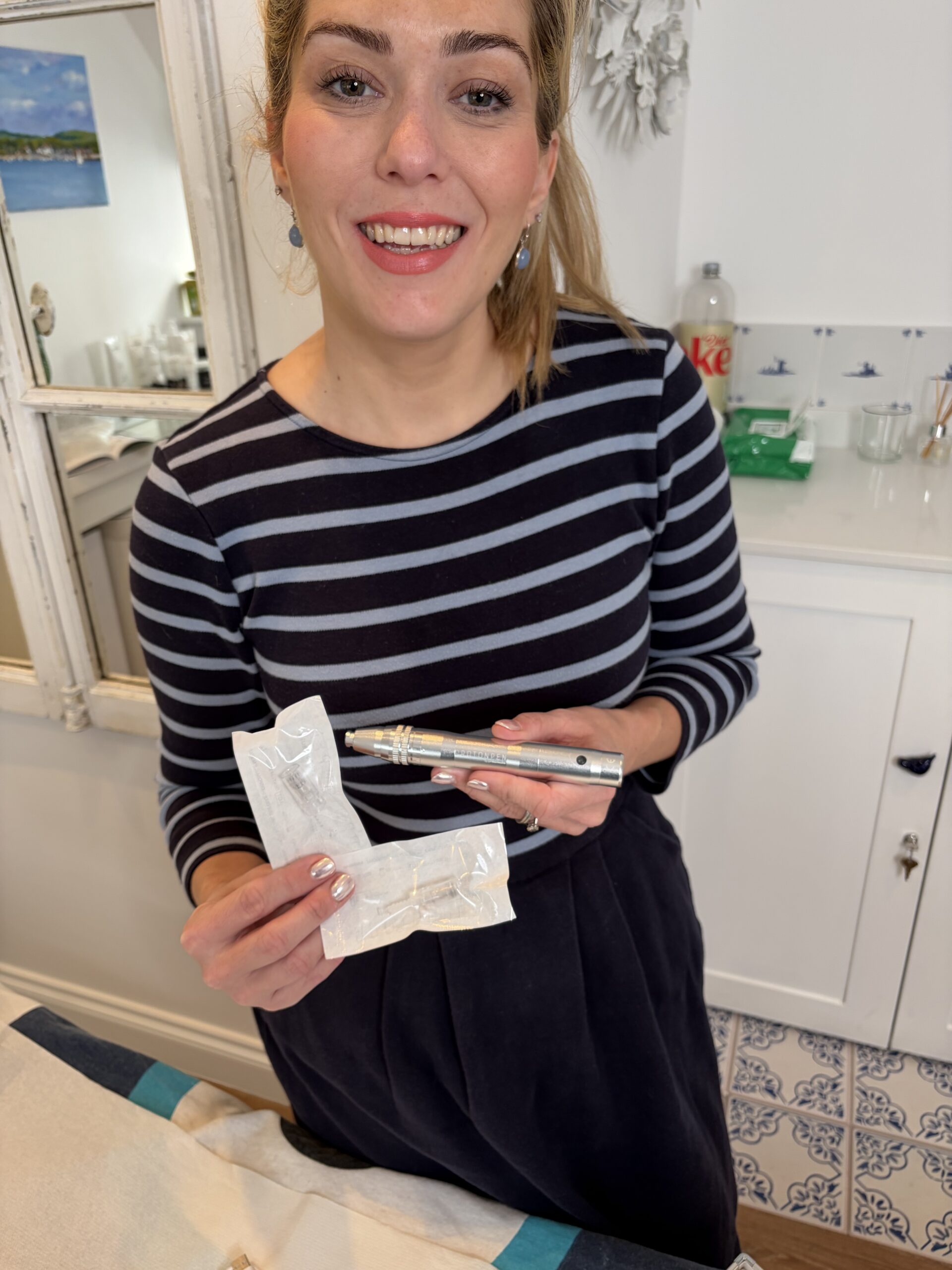
| Technique | Rollers enter at an angle and can tear the skin | A pen moves the needles straight in and out |
| Products used | Often whatever serum is to hand | Sterile products suitable for use with microneedling |
| Assessment | None | Medical history, skin assessment and aftercare |
| What it achieves | Mainly better product absorption | Collagen stimulation over a course |
The risks of microneedling at home
- Infection. Bacteria on the skin or on a reused device can be pushed into the channels. Microneedling around the mouth can also trigger cold sores.
- Irritation and barrier damage. Using a device too often or pressing too hard leaves skin red, sore and reactive. My guide to repairing your skin barrier helps if this has happened.
- Pigmentation. Irritated skin can darken, particularly in medium and darker skin tones and in the sunnier months. See my guide to pigmentation.
- Scarring. Rolling hard or repeatedly can leave fine track marks, and needling over inflamed spots can spread acne.
- Serious reactions. Doctors have published case reports of persistent inflamed lumps and allergic reactions after products not designed to go into the skin were applied during microneedling.
“A home roller is a skincare tool. Clinic microneedling is a medical treatment. They are not interchangeable.”
If you choose to use a device at home
- Use short needles only, and never on active spots, cold sores, broken, sunburnt or irritated skin.
- Start with clean skin, clean the device as the manufacturer advises, never share it, and replace it regularly.
- Avoid applying retinoids, acids, vitamin C or fragranced products straight afterwards. My guide to skincare around your treatment explains which products to pause.
- Wear SPF every morning, and give your skin time to recover fully between uses.
- If you are having treatment with me, ask before using a home device between clinic sessions.
Stop and get advice if you notice spreading redness, increasing pain or swelling, pus, a fever, or a rash that does not settle. Contact your GP or NHS 111.
When clinic microneedling is the better choice
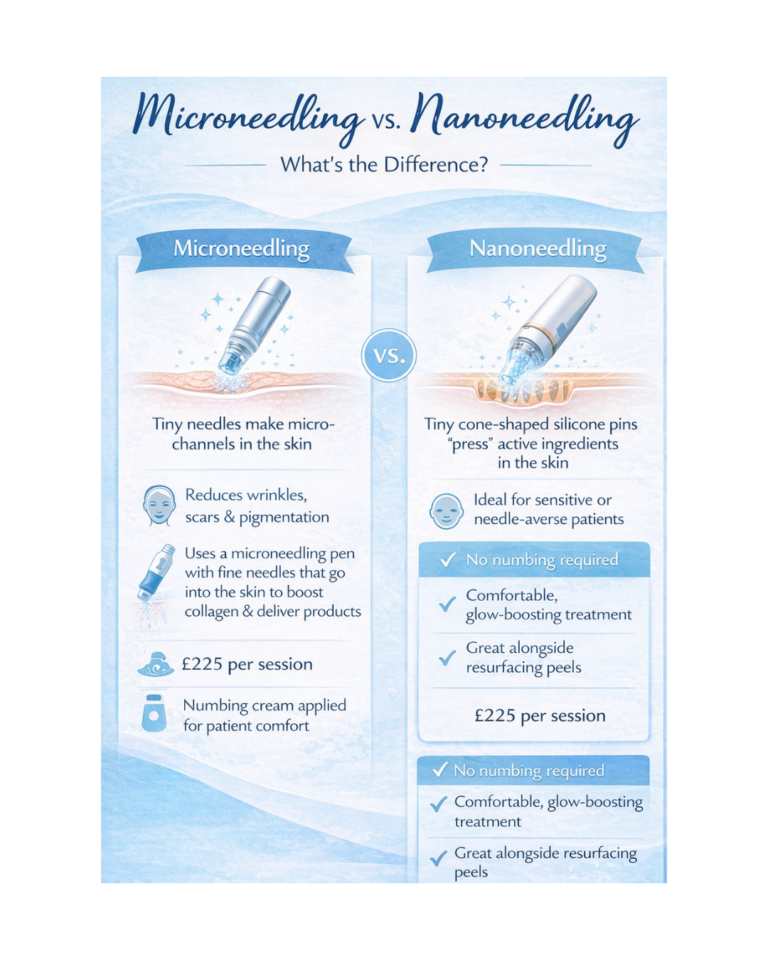
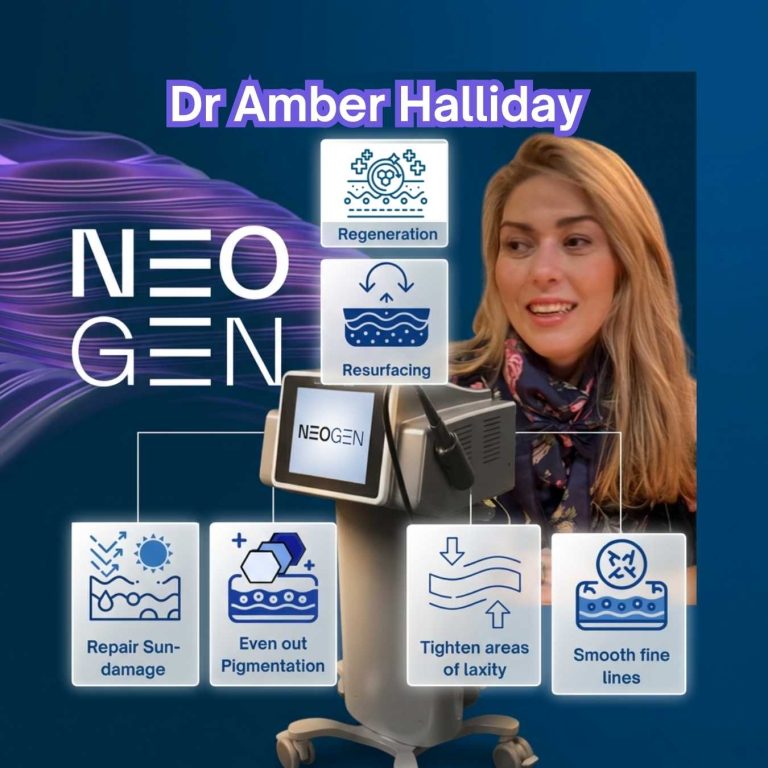
If you want to change the skin itself rather than help products absorb, clinic treatment is the safer and more effective route. Microneedling at Blue Bird Aesthetics is used for fine lines, uneven texture, enlarged pores and acne scarring, usually as a course of three or more sessions, four to six weeks apart. For sensitive skin, nanoneedling is a gentler option, and liquid microneedling renews the skin without traditional needles. Also see my page on NeoGen plasma regeneration if you are looking for long-lasting skin improvements.
Common questions
Is at-home microneedling safe?
Short-needle home devices are relatively low risk if used gently, on healthy skin and with clean equipment, but infection, irritation and pigmentation do happen. Longer needles at home carry more risk.
Does a dermaroller stimulate collagen?
Short home needles mainly help products absorb. Stimulating collagen needs greater depth, which is safer in a clinic with sterile, single-use equipment.
What is the difference between a dermaroller and a microneedling pen?
A roller drives needles in at an angle as it rolls, which can tear the skin. A pen moves the needles straight in and out, which gives more even, controlled channels.
Can I use a dermaroller between clinic treatments?
Please ask me first. Using a home device too close to a clinic session can irritate the skin and slow healing, so I will tell you whether it fits your plan.
How often can I use a dermaroller?
Follow the manufacturer’s instructions and let your skin recover fully between uses. If your skin is red, sore or flaky, it needs longer.
Can at-home microneedling cause scarring?
Yes, particularly if the device is pressed too hard, used too often or used on inflamed or infected skin. Medium and darker skin tones are also more prone to pigmentation after irritation.
Who should not microneedle at home?
Anyone with active acne, rosacea, eczema, cold sores, a skin infection or a tendency to keloid scars, and anyone taking isotretinoin.
How much does clinic microneedling cost?
Microneedling at Blue Bird Aesthetics starts from £225 for the face, or £295 for the face and neck. Your consultation is free and every price is on our treatment menu.
Talk it through with Dr Halliday
If you have been using a home device and are not getting the result you hoped for, or your skin has reacted, a consultation is the place to start. I will look at your skin and suggest whether clinic microneedling, or something else, would suit you better. Consultations are free, and there is no pressure to book treatment on the day.
When you book through Glowday, a £75 card authorisation is taken. No payment is taken if you attend; a charge applies only if you miss the appointment or cancel with less than 24 hours’ notice. Full prices are on our treatment menu.
Book a free consultation via Glowday → · Message us on WhatsApp
Further reading
- How Microneedling Works: Controlled Injury and Collagen
- Microneedling in Worthing: What It Achieves and How to Decide
- Microneedling for Acne Scarring: What Works, What Doesn’t
- Liquid Microneedling: Spicule Therapy Explained
- Skincare Around Your Treatment: What to Pause and When to Restart
- Skin Texture and Enlarged Pores