Microneedling in Worthing: What It Achieves and How to Know If It’s Right for Your Skin
Realistic session-by-session results, which concerns respond best, where other treatments serve better, and what treatment at Blue Bird Aesthetics involves.
By Dr Amber Halliday, MRCGP MBBS BSc (Hons) — GP & Aesthetics Doctor | Blue Bird Aesthetics, Worthing | Updated 2026
TL;DR — Key Takeaways
Short on time? Here’s the summary:
✓ Microneedling produces gradual skin quality improvements — results build over a course of 3+ sessions and continue for months afterwards.
✓ It is excellent for acne scarring, enlarged pores and skin texture. It is not the right treatment for significant laxity, active acne or deep pigmentation.
✓ Spacing sessions 4–6 weeks apart is clinically important — more frequent treatment does not produce faster results.
✓ For some concerns — skin laxity, deeper pigmentation, significant scarring — NeoGen or other treatments serve better.
✓ A consultation identifies which treatment, in which combination and order, is right for your skin.
Looking for pricing and booking information?
This article is a clinical guide to Microneedling. For prices,
packages and to book a consultation, visit our
Microneedling treatment page
.
The Conversation About Expectations
After reading about microneedling, most patients come with a specific concern in mind and a reasonable question: will this work for me, and what will I see? This article is that conversation — the decision-making guide rather than the mechanism explanation.
If you want to understand the biological mechanism, the three healing phases and why medical-grade differs from home rollers, that is in my guide to how microneedling works. Here, I want to talk about the realistic timeline, which concerns respond well, which might be better served by something else, and what treatment at Blue Bird Aesthetics looks like.
The Realistic Results Conversation
Microneedling is not a dramatic, immediate transformation. It is a gradual, cumulative improvement in skin quality that builds across a course and continues for months after the course ends. That is not a limitation — it is the mechanism. The results look natural because they are your own skin, rebuilt.
- After session 1: skin may look temporarily smoother due to mild swelling and the inflammatory response. This settles. True collagen changes are beginning beneath the surface.
- After session 2 (4–6 weeks later): more noticeable improvement in texture, pore appearance and overall skin quality. Most patients see this as meaningful progress.
- After session 3 (8–12 weeks from start): cumulative improvement. This is often where patients see the change they were hoping for.
- Months 3–6: remodelling continues. Results keep improving after the course ends. The six-month point after starting is often the best the skin looks.
The patients who are happiest with microneedling are those who understand this timeline and commit to the course. Those who judge the result after one session often underestimate what the full course delivers.
Which Skin Concerns Respond Best
Acne scarring — one of the strongest indications
Atrophic acne scars — the depressed, rolling, boxcar and ice-pick types — respond well to microneedling. For significant or deep scarring, four to six sessions is typical and a Plinest polynucleotide add-on meaningfully enhances the result. My guide to microneedling for acne scarring covers which scar types respond best and which don’t.
Enlarged pores
One of the most consistent and relatively rapid improvements. Pore size is influenced by the structural support around them — collagen stimulation firms that support and reduces their visible size. Most patients notice this after the second session.
Skin texture and surface unevenness
Very well suited. Rough, uneven texture that does not have a specific pigmentation or volume component responds consistently well across a course.
Fine lines contributing to skin ageing
Moderate response, particularly for fine lines in areas of thinner skin. Deeper structural lines and those caused by significant muscle movement respond less, and a different approach may be needed alongside.
Where Different Treatments Serve Better
The most valuable part of a consultation is recommending something different when it will serve you better. Here is where I typically redirect:
Significant skin laxity
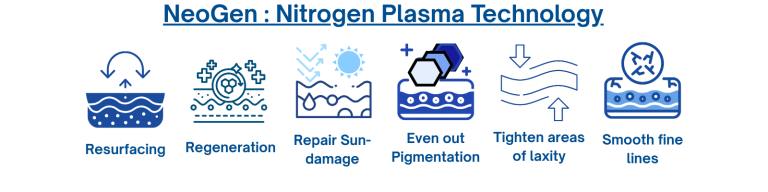
If loose skin, jowling or early tissue descent is the primary concern, microneedling will improve skin quality but is unlikely to produce meaningful tightening. NeoGen Plasma — which uses plasma energy to create deep tissue remodelling — is the appropriate treatment for significant laxity.
Active acne
Microneedling is contraindicated over active, inflamed acne. Treatment should wait until the active phase is controlled. My guide to hormonal acne covers the barrier-first approach to calming active acne before any in-clinic treatment.
Deep or established pigmentation
Some improvement in overall tone, but established pigmentation — particularly melasma — responds more reliably to targeted peels, with NeoGen as an option for skin where resurfacing is the goal.
Hydration and glow as the primary goal
If the main concern is dehydration and lack of radiance rather than structural skin quality, skin boosters or Profhilo often deliver a faster, more targeted result. The comparison of microneedling, boosters and polynucleotides helps with this decision.
How Many Sessions and Why
The standard recommendation is a course of three sessions, spaced 4–6 weeks apart, for general skin quality improvement. For acne scarring: four to six sessions is typical, and expectations should be set around meaningful rather than complete improvement.
Why spacing matters: each session initiates a collagen remodelling cycle that takes weeks to fully complete. Treating too frequently does not accelerate results — it interrupts the cycle. The 4–6 week interval is not a commercial convenience; it is clinically appropriate.
Maintenance after a course: most patients benefit from a single maintenance session every 3–6 months to sustain the improvement.
Prices in Worthing — What It Costs
All pricing information can be found on my website’s treatment menu.
Preparing Your Skin for Best Results
The condition of the skin going into treatment significantly influences the outcome. I typically recommend:
- AlumierMD skincare established in advance — active ingredients including retinol and vitamin C improve skin cell turnover and enhance the treatment response.
- No retinoids for 5 days before treatment — to avoid increased sensitivity.
- No active acids for 5–7 days before — glycolic, salicylic and similar should be paused.
- No active sun damage — treatment should not be performed on visibly sun-affected skin.
- Adequate hydration and barrier support in the week before — gentle, nourishing skincare rather than actives.
What the Experience at Blue Bird Looks Like
Your first appointment begins with a consultation to confirm microneedling is the right treatment for your concern. If treatment proceeds, topical numbing cream is applied 20–30 minutes before. The treatment itself takes 30–45 minutes depending on the area and any add-ons. Post-treatment you will be red, as though mildly sunburned, and this settles within 24–48 hours.
The review conversation happens at or after session two — this is where we assess your response, adjust the plan if needed, and set expectations for the rest of the course.
The patients who are most satisfied are those who trust the process and give the course time to work. Three months in, most people are very glad they committed.
— Dr Amber Halliday
Ready to talk it through?
Book a calm, considered, commitment-free consultation in Worthing.
A consultation confirms whether microneedling is right for your skin — and what to combine it with.
Further Reading & Related Treatments
- How Microneedling Works — the biology and mechanism explained
- Microneedling for Acne Scarring: What Works and What Doesn’t
- Skin Boosters, Polynucleotides and Microneedling — How They Compare
- NeoGen Plasma — for skin laxity and deeper regeneration
- The Ultimate Guide to Aesthetic Treatments in Worthing
Frequently Asked Questions
Can I work the next day?
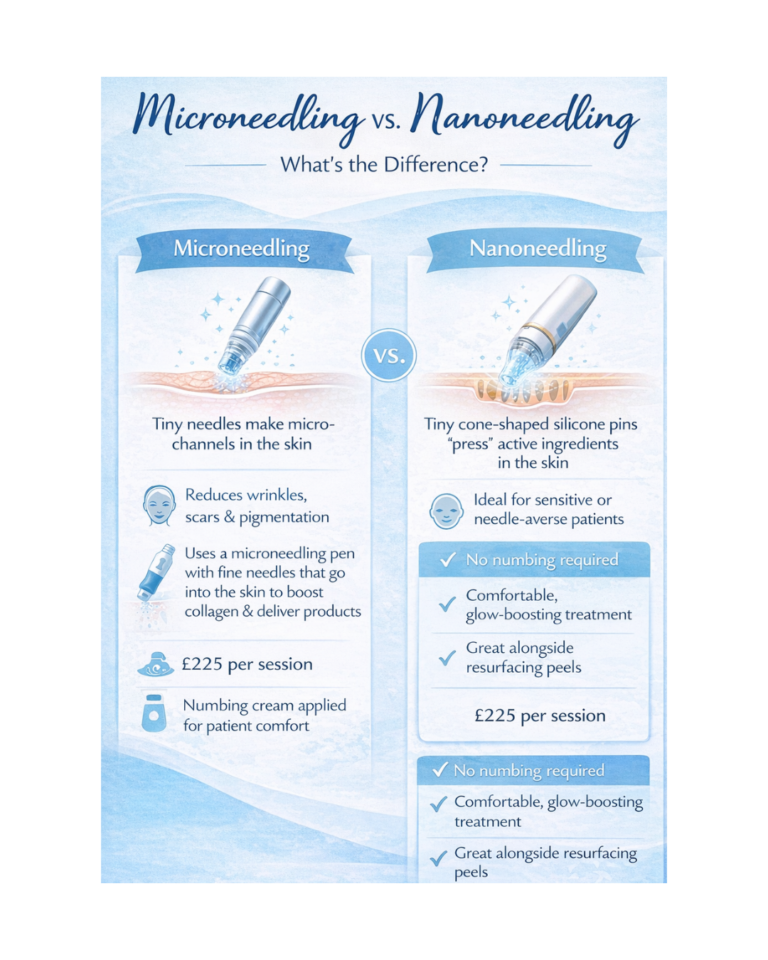
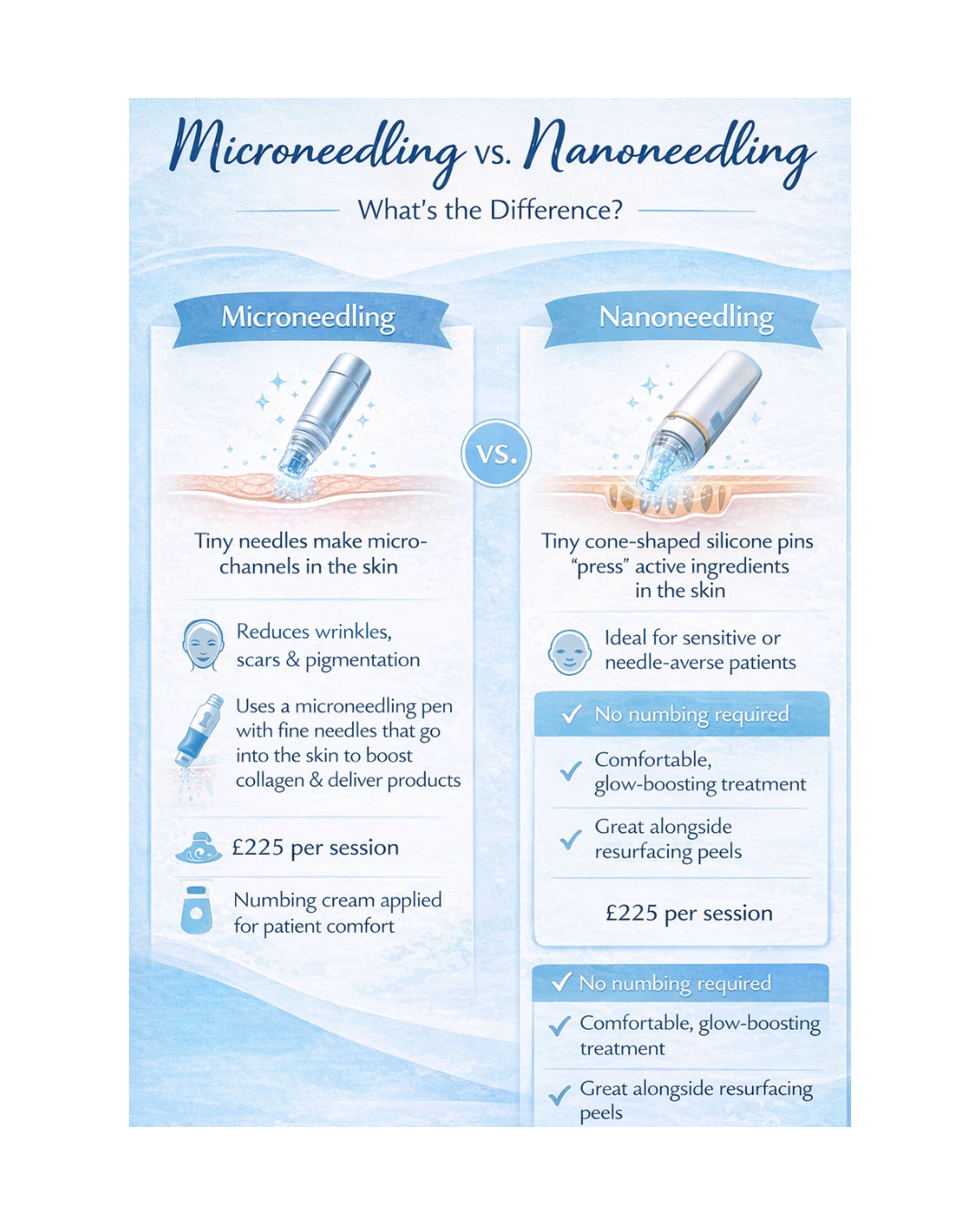
For standard microneedling: yes, most patients return to work within 24–48 hours. Nanoneedling has essentially no downtime; liquid microneedling involves mild temporary redness.
Is there anything that makes me unsuitable?
Active acne over the treatment area, active eczema or psoriasis flares, recent isotretinoin use (within 6 months), pregnancy, certain medical conditions and some medications. All assessed at consultation.
How does it compare to a home roller?
Medical-grade microneedling reaches significantly deeper, uses sterile single-use cartridges, allows depth adjustment per area, and creates clean channels rather than tearing. The treatments are not equivalent.
Can it be combined with fillers or anti-wrinkle injections?
Yes, but not on the same day. I typically recommend spacing microneedling at least 2 weeks from injectable treatments.
What if I have very sensitive skin?
Nanoneedling is the ideal starting point — no needles breach the skin, no numbing required, and downtime is minimal. From there we can assess whether standard microneedling is appropriate.