Serums Explained: Which One Is Right for Your Skin Concern?
Serums are where a routine gets personal. There are eleven on your card, and most people need one or two. Here is what each one is for, and how I decide.
By Dr Amber Halliday, MRCGP MBBS BSc (Hons) | Blue Bird Aesthetics, Worthing | Last reviewed October 2026
Your skincare plan, section by section
A serum is a lightweight layer that carries a higher concentration of a particular ingredient than a moisturiser can. That makes it the step that does the most targeted work, and also the step where it is easiest to buy too much. Two well-chosen serums will almost always do more for you than five that overlap. I usually pick one for protection in the morning and one aimed at your main concern.
Start with your main concern: tap to see where I usually begin
Fine lines, dullness and early signs of ageing
EverActive C&E + Peptide in the morning, often with a retinoid at night. If you want a simpler option, or your skin is already busy, Alumience A.G.E. or CellDerma’s Vitamin C Complex.
Related: fine lines and wrinkles
Dehydrated, tight or tired-looking skin
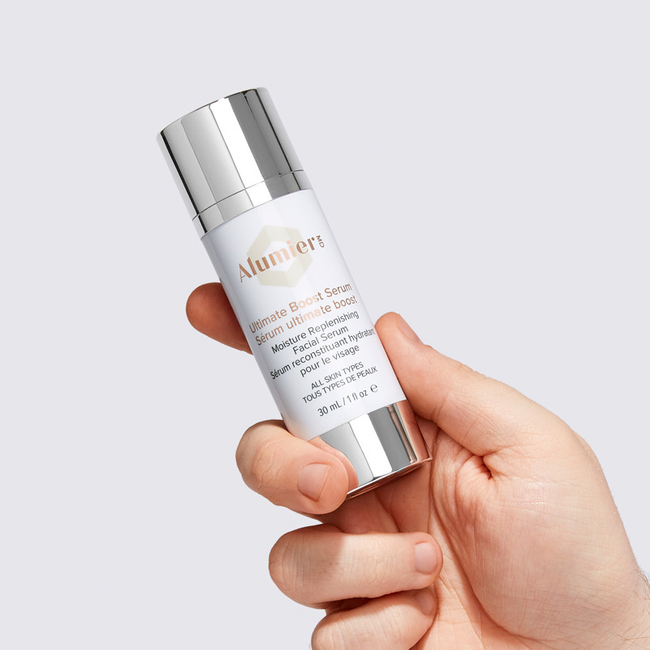
Ultimate Boost Serum, the serum I recommend most often because it suits almost every skin type.
Related: dull or dehydrated skin
Visible redness, flushing or sensitivity
Calm-R, with a gentle cleanser and a mineral sunscreen. I keep other actives to a minimum until your skin has settled.
Related: a doctor’s guide to rosacea. Redness that burns, spreads or comes with spots is worth showing your GP.
Blocked pores and breakouts
Clarifying Serum, usually with the Clarifying Cleanser and a light moisturiser.
Breakouts that are painful, deep or scarring need a GP first, because prescription treatment may be what you need. For marks left behind, see acne scarring.
Uneven tone, sun spots or dark marks
One of Intellibright Complex, EvenTone or CellDerma’s Pigment Correct, never all three, and sunscreen every single morning. Which one depends on your skin and the type of pigmentation.
Related: pigmentation and melasma. Any new, changing or irregular dark mark needs checking by your GP before it is treated cosmetically.
Rough texture and a dull surface
AHA Renewal Serum on a few evenings a week, counted as one of your exfoliation nights.
Related: skin texture and enlarged pores
I have just had a treatment
CellDerma’s GF5 Next Generation is the serum I most often tick for the recovery window after NeoGen, microneedling, a peel or a skin booster, when your usual actives are paused.
Related: skincare around your treatment
The eleven serums on your card
AM and PM show when each serum can be used, as on the card. A blue dot means CellDerma.
Vitamin C · AM only
EverActive C&E + Peptide
15% vitamin C with vitamin E and a firming peptide. Vitamin C breaks down once mixed, so the powder and serum are kept apart and you combine them when you open a new bottle. That way the serum is fresh when you start using it. Used in the morning, under sunscreen.
AlumierMD · antioxidant, fine lines, radiance
Antioxidant · AM · PM
Vitamin C Complex
CellDerma’s vitamin C serum, which can be used morning and evening or in the morning alone. A sensible partner to Retin-ACE if your routine is otherwise CellDerma.
CellDerma · antioxidant support
Hydration · AM · PM
Ultimate Boost Serum
Hydrating serum with peptides that draws moisture into the skin and supports the barrier. It sits comfortably alongside almost everything else on the card, which is why it appears on so many plans.
AlumierMD · hydration, barrier support
Firmness · AM · PM
Alumience A.G.E.
An antioxidant serum with amino acids and exopolysaccharides, designed to help defend skin against pollution and the everyday stresses that contribute to visible ageing. A good choice if you want overall skin quality rather than one specific target.
AlumierMD · firmness, overall skin quality
Visible redness · AM · PM
Calm-R
A serum for sensitive, redness-prone skin, with niacinamide to support the barrier. It helps reduce the look of redness and makes skin feel more comfortable.
AlumierMD · redness, sensitivity
Blemish-prone · AM · PM
Clarifying Serum
A very light serum combining encapsulated and free salicylic acid, which gently exfoliates inside the pore, with a peptide and soothing ingredients. It counts as an active, so it pauses around treatments.
AlumierMD · congestion, breakouts
Uneven tone · AM · PM
Intellibright Complex
A brightening serum with arbutin, kojic acid and pomegranate extract, aimed at existing discolouration and at helping to limit new marks forming.
AlumierMD · discolouration
Uneven tone · AM · PM
EvenTone
A lighter, hydroquinone-free brightening serum using Emblica, white shiitake mushroom, liquorice and peptides. I often choose it for sensitive skin, or as a gentler step than Intellibright.
AlumierMD · uneven tone, radiance
Texture · PM only
AHA Renewal Serum
8% lactic acid with hyaluronic acid, allantoin and vitamin B5 to keep skin comfortable. It is an exfoliant in serum form, so it is an evening product and counts towards your one to three exfoliation nights.
AlumierMD · texture, dullness
Post-treatment · AM · PM
GF5 Next Generation
CellDerma’s best-known serum: growth factors and peptides with ceramides, cholesterol and hyaluronic acid, formulated to support the skin barrier. I use it most around treatments. It is one of the more expensive products I recommend, so I only tick it where I think it is worth it.
CellDerma · recovery, barrier support
Uneven tone · AM · PM
Pigment Correct
A brightening serum with kojic acid, bearberry leaf extract and a peptide in a hyaluronic acid base. Not for use in the week after a resurfacing treatment, and only once any flaking has finished.
CellDerma · dark marks, uneven tone
Which serums work well together
Pairings I often use
- Vitamin C in the morning, retinoid at night
- Ultimate Boost with almost anything
- Calm-R with a brightening serum, once redness has settled
- Clarifying Serum with Ultimate Boost if skin feels dry
Pairings I avoid
- Two or three brightening serums at once
- AHA Renewal Serum on a retinoid night while you are starting out
- Any acid or retinoid in the recovery window after a treatment
- A new serum and a new retinoid in the same week
For the reasoning behind these ingredients, including why vitamin C, retinoids and SPF are the three with the strongest evidence, see my piece on evidence-based aesthetics. And if the concern you want to change is deeper than the surface, such as crepiness or loss of firmness, serums have a ceiling. That is when in-clinic options like skin boosters or microneedling are worth discussing.
Commercial disclosure: Blue Bird Aesthetics sells AlumierMD and CellDerma products and may earn commission on purchases made in clinic or through our links. You are free to buy elsewhere, or not at all. Our clinical advice does not change either way.
Common questions
Why is EverActive greyed out for the evening?
Vitamin C does its most useful work as an antioxidant during the day, under your sunscreen. Keeping it to the morning also leaves the evening free for a retinoid.
My vitamin C serum has changed colour. Is it still OK?
Vitamin C darkens as it oxidises. A slight change towards the end of a bottle is normal. If it has turned clearly orange or brown, it has lost much of its benefit and it is time for a fresh one.
How long should I give a serum before deciding it is not working?
Hydrating serums show a difference within a couple of weeks. Brightening and anti-ageing serums need eight to twelve weeks of daily use, with sunscreen, before it is fair to judge them.
Can I use serums in pregnancy?
Some, yes, but tell me first and I will review every product on your plan. Retinoids are not for use in pregnancy or while breastfeeding.
Choosing between two serums?
That is exactly what a review is for. I would rather you bought one that suits you than three that do not.



3 Comments